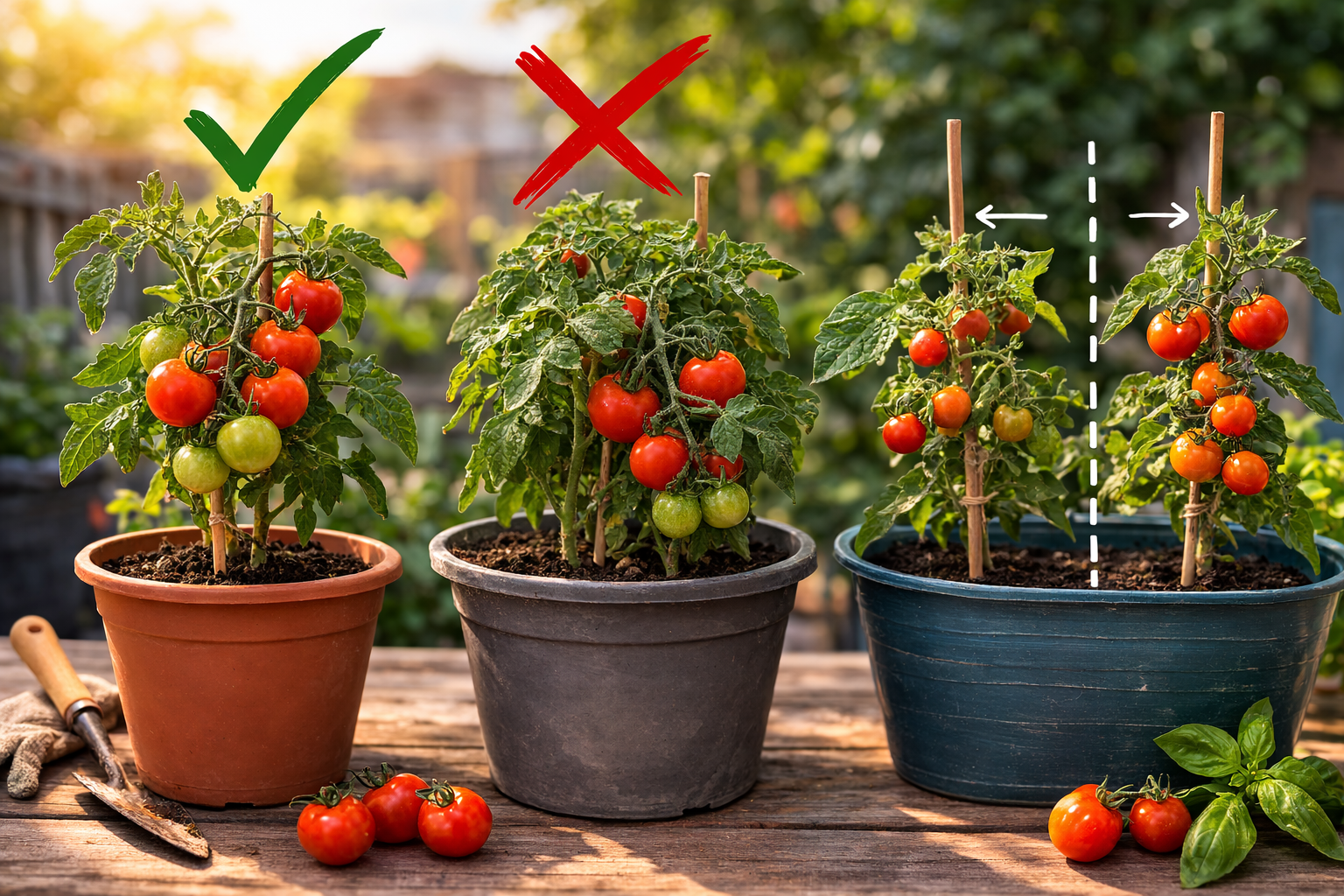
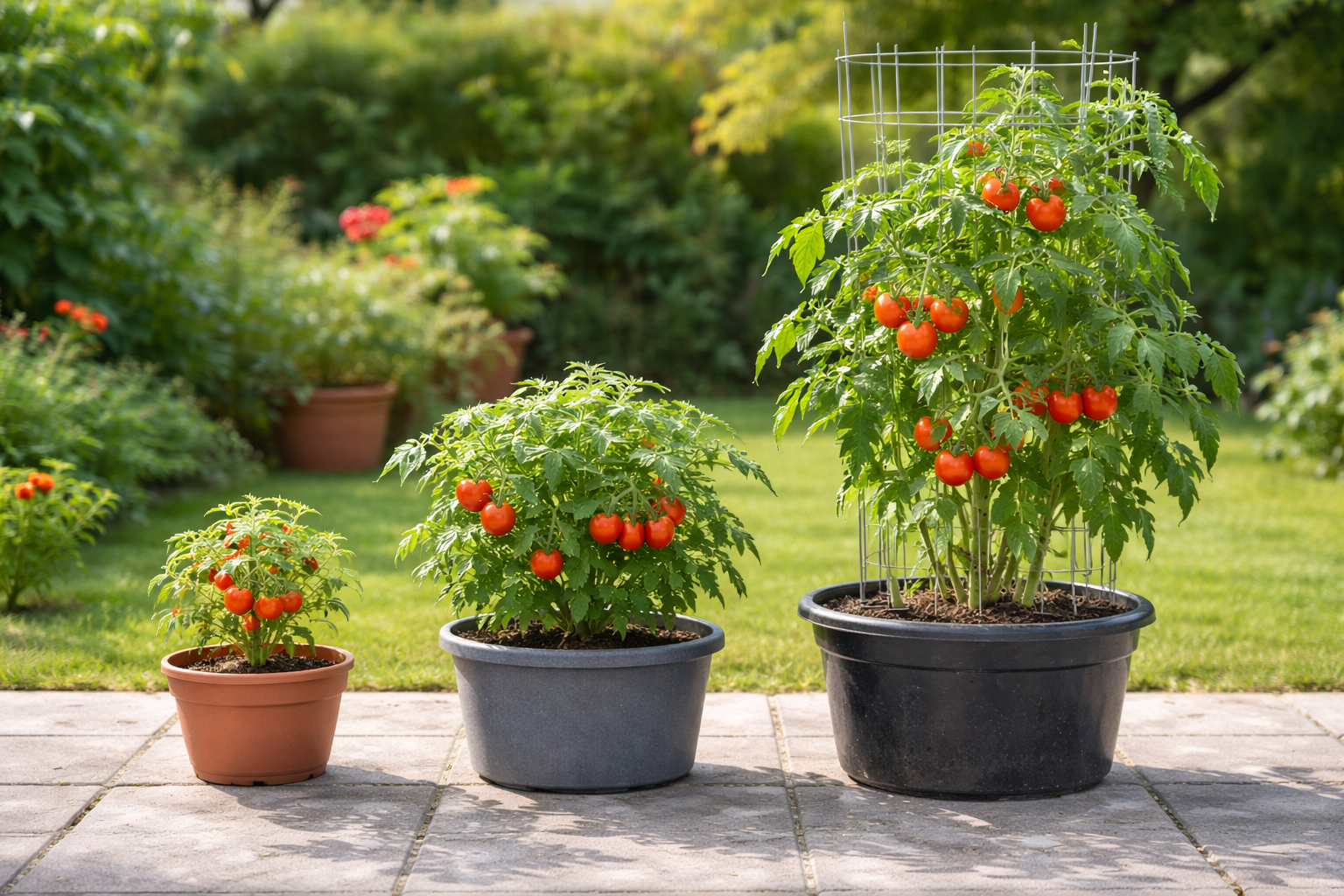
You buy a container that looks generous in spring, tuck in two tomato starts because the pot still seems half empty, and feel clever for about three weeks. Then summer hits. The leaves start drooping by lunchtime, the soil swings from soggy to bone dry, one plant bullies the other, and the harvest never looks like the picture on the tag.
That is why the question how many tomato plants per container has a short answer and a useful answer. The short answer is usually one. The useful answer is one plant per container in most cases, with only a few exceptions for tiny dwarf varieties or very large planters. Once you factor in tomato type, container size, heat, and how often you can water, the right choice gets much easier.
In my own container setups, the biggest lesson was not that tomatoes are fussy. It was that crowding them makes every other problem worse. A pot that feels roomy in April can feel cramped by June, especially on a hot patio or windy balcony.
In this guide, you’ll learn:
- When one plant per pot is the right rule
- When you can bend that rule without regretting it later
- Why tomato type matters more than most people think
- What overcrowding actually costs you in yield and plant health
- How to match plant count to your exact setup, not just the label on the pot
Key takeaway
If you want the safest, easiest answer, plant one tomato per container. The only time to push beyond that is when you are growing true dwarf types or using a genuinely large planter with room, airflow, and reliable watering.
How many tomato plants per container? Here’s the useful answer first
For most gardeners, the right answer is one tomato plant per container.
That is the cleanest rule because tomatoes are heavy feeders with big root systems, and containers magnify every mistake. The moment you put two standard tomato plants in one average pot, you are asking them to share water, nutrients, and root space all season. That rarely ends as well as people hope.
A common baseline from university extension guidance is one plant in at least a 4 to 5 gallon container, with larger pots making life easier, especially for vigorous varieties. UNH Extension also notes that bigger containers dry out less quickly and are easier to manage through summer.
Here is the practical version:
- If the tomato is standard-sized, slicer, beefsteak, or indeterminate, plant one per container.
- If the tomato is compact, patio, dwarf, or determinate, one per container is still the safe default, but it can live comfortably in a smaller pot.
- If the tomato is a true micro-dwarf, one small plant in a smaller pot can work well.
- If you are thinking about planting two in one container, only consider it when both plants stay compact and the planter is truly large.
The reason the generic answer feels frustrating is that it is technically correct, but it leaves out the part that matters: not all tomato plants grow like they have the same appetite. Some stay polite and tidy. Others sprawl like they are trying to annex the patio.
The simple planting rule by container size
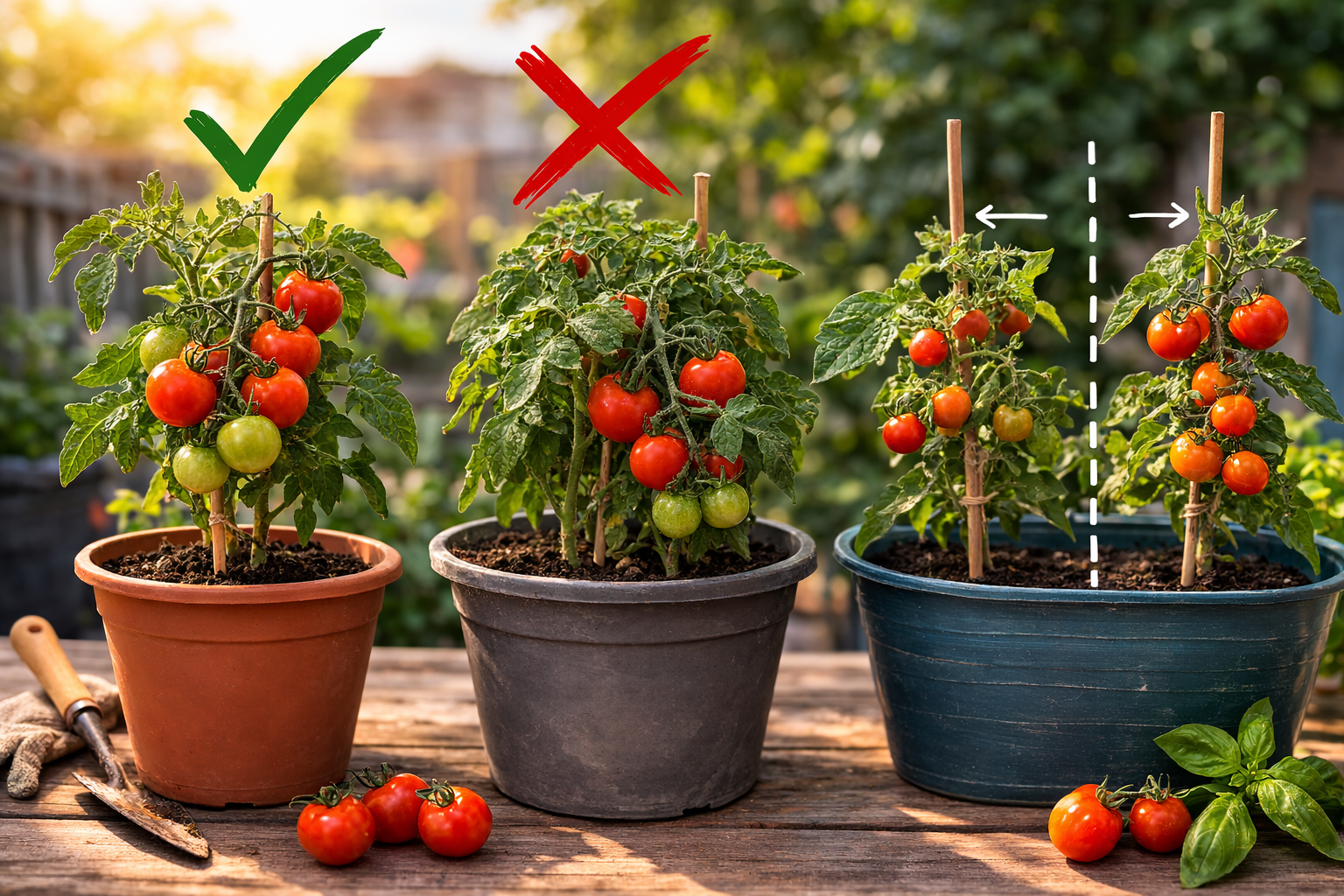
If you just want a fast rule you can use in the garden center aisle, use this:
- Very small pots or window-box sizes: one micro-dwarf or trailing basket tomato only
- About 4 to 5 gallons: one compact determinate, patio tomato, or dwarf
- About 7 to 10 gallons: one standard tomato, including many cherries and most indeterminates
- Large troughs and oversized planters: maybe more than one, but only with compact varieties and real spacing
This is where many gardeners get tripped up. They hear that a 5 gallon bucket can grow a tomato and translate that into “a 5 gallon bucket is roomy.” It is not roomy. It is workable. Those are different things.
If you have ever worn shoes that technically fit but become miserable after a long walk, you already understand the difference. A minimum-size container can keep a plant alive and productive, but it gives you far less room for missed watering, heat spikes, or fast growth.
Width matters too. A wide, stable pot often performs better than a narrow deep one because it gives roots a broader zone and reduces tipping once the plant gets top-heavy. If two containers claim similar volume, I would usually choose the wider one for tomatoes.
Common mistake
Treating the minimum pot size like the ideal pot size. If your site is hot, windy, or hard to water consistently, size up instead of trying to squeeze by on the minimum.
If you are still deciding what kind of plant belongs in that container, this guide to the best tomato varieties for containers will save you from pairing the wrong variety with the wrong pot.
Why tomato type changes the answer more than people expect
Most confusion comes from treating “tomato” like it describes one plant. It does not. Growth habit changes everything.
Determinate tomatoes tend to stay more compact, set fruit over a shorter window, and are usually easier in containers. Indeterminate tomatoes keep growing, keep climbing, and keep demanding more root room, support, and water. Dwarf types stay more compact than standard plants, while micro-dwarf tomatoes are the tiny outliers that can actually suit small containers.
Fruit size is not the best guide here. Plenty of cherry tomatoes are vigorous vines. Some of them are absolute space hogs. A cherry tomato is not automatically a small plant just because the fruit is small.
Use these if and then rules:
- If the tag says indeterminate, assume one plant and use the bigger container you can manage.
- If the tag says patio, compact, or determinate, one plant in a smaller container is more realistic.
- If the tag says dwarf or micro-dwarf, small-space growing becomes much easier.
- If you want large slicers, do not crowd the pot trying to increase output. Give one plant enough room instead.
I have had much better luck on balconies with compact cherries and dwarfs than with large indeterminate slicers in borderline containers. The larger plant always turns the season into a full-time watering job. The compact types feel far more forgiving, especially for beginners.
Oregon State Extension makes the same broad distinction: determinate tomatoes are generally better suited to containers than indeterminate ones. That lines up closely with what gardeners see in practice once the weather warms up.
Key takeaway
The right plant count depends more on growth habit than fruit type. A vigorous cherry tomato can need as much respect as a slicer.
Here’s what crowding really costs you
The main reason people crowd containers is simple: more plants feels like it should mean more tomatoes. In pots, that logic often breaks down.
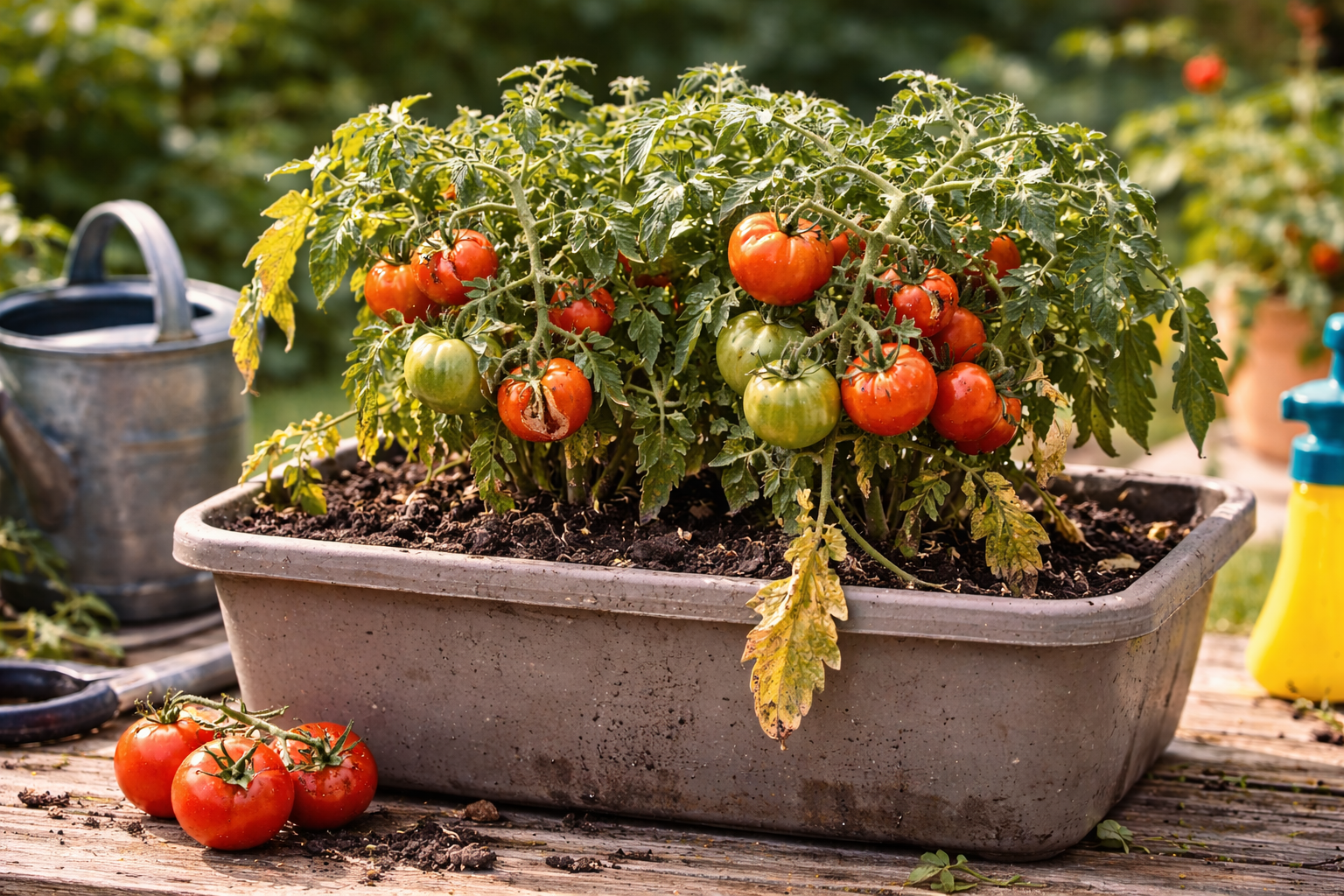
When two standard tomato plants share one undersized container, each plant ends up with a smaller root system. Smaller root systems dry out faster, run through nutrients faster, and handle stress worse. The result is not just “a bit less growth.” It is often a chain reaction of problems.
You may notice:
- midday wilt even when you watered recently
- fruit cracking after inconsistent moisture
- blossom end rot after sharp watering swings
- weaker flowering and fruit set
- one plant overtaking the other
- more tangled stems and worse airflow
This is the part nobody tells beginners clearly enough: crowding is not only a spacing issue. It is a stress multiplier. Once the root zone is too tight, every hot day hits harder and every missed watering matters more.
In peak summer, a standard tomato in a container can already need frequent watering. Add extra crowding, fabric sides, or reflected heat from a wall, and you can go from relaxed once-a-day care to chasing thirst morning and evening.
If your tomatoes always seem to lurch between thirsty and soggy, the potting mix might be part of the problem too. A better container medium can buy you more consistency. This breakdown of the best soil for growing tomatoes in pots is useful if you want fewer moisture swings and stronger root growth.
Common mistake
Planting for how the container looks on day one. A tomato transplant is tiny compared with the plant it becomes. Judge the pot by midsummer size, not spring size.
When can you put more than one tomato plant in a container?
There are exceptions, but they are narrower than most articles make them sound.
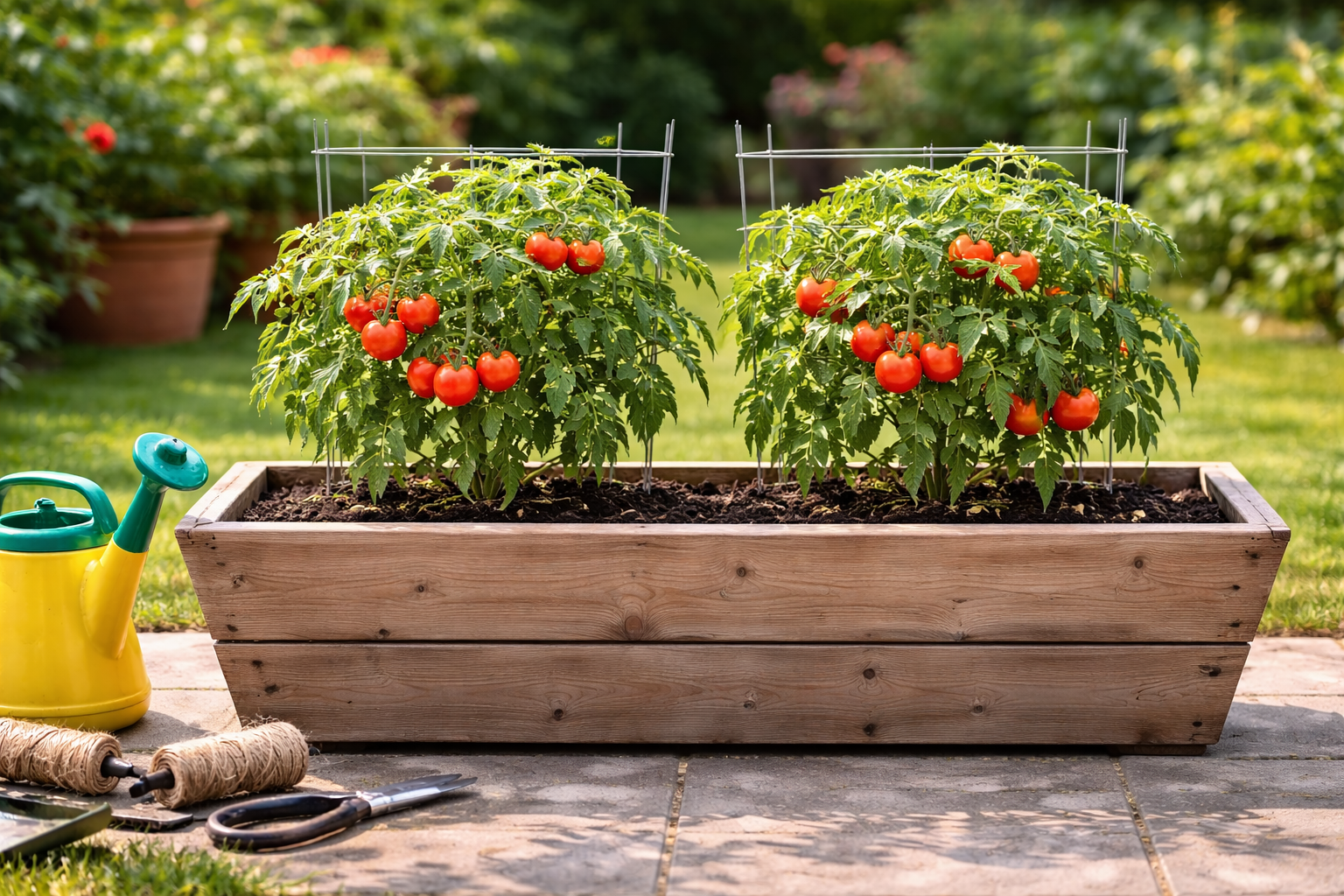
You can sometimes plant more than one tomato in a container if all of these are true:
- the planter is genuinely large, not just average
- the varieties are compact, dwarf, or otherwise restrained
- you have room for airflow and support
- you are willing to stay on top of watering and feeding
Examples that can work:
- two compact patio tomatoes in a long, wide trough with generous spacing
- two dwarf tomatoes in a very large planter that behaves more like a mini raised bed than a pot
- tiny micro-dwarfs in window-box style containers, one per section with enough room around each
Examples that usually disappoint:
- two standard tomatoes in a 5 gallon bucket
- one compact tomato paired with one vigorous cherry in the same pot
- two indeterminate plants sharing one container because the seedlings looked small
The deeper truth is this: if you are asking because you want the easiest, most reliable setup, stick with one. If you are asking because you enjoy tweaking, pruning, staking, and staying ahead of the watering curve, a few exceptions can work. They just are not the best default for most readers.
Match the plant count to your setup, not just the pot label
Container size matters, but your growing conditions matter almost as much.
A tomato in a 7 gallon container on a mild patio may be easy. The same tomato in a 7 gallon fabric grow bag on a hot, windy balcony may behave like it is under-potted all season.
Here are the big setup factors that change the answer:
- Heat: black pots, masonry walls, and reflective surfaces make the root zone hotter and thirstier
- Wind: balconies and rooftops pull moisture from leaves and soil faster than sheltered patios
- Container material: fabric grow bags breathe well but dry faster
- Sun: less than full sun makes large, hungry varieties harder to justify
- Your routine: if you miss weekend watering or travel often, give each plant more soil, not less
Use these rules:
- If your site runs hot and dry, go up a container size or choose a more compact plant.
- If you are using fabric pots, do not treat the minimum volume like a luxury size.
- If you only get partial sun, skip the big ambitious slicer and pick a compact cherry or dwarf.
- If you are a first-time grower, choose the setup that gives you more margin for error, not less.
This is also why broad guidance from the Royal Horticultural Society is useful. Their edible-container advice consistently leans toward matching crop vigor to container size and spacing rather than assuming any pot that technically fits is good enough.
Key takeaway
Minimum container size is not the same as comfortable container size. Hotter, windier, thirstier setups need more root room to stay manageable.
A no-regret planting framework you can use in 30 seconds
If you want a fast way to decide without second-guessing yourself, run through these four steps.
Step 1: Identify the tomato type.
Read the tag. Look for words like determinate, indeterminate, patio, compact, dwarf, or micro-dwarf.
Step 2: Check the real container size.
Look at both volume and width. A broad 10 gallon pot gives you a different experience from a tall narrow pot with similar capacity.
Step 3: Be honest about your setup.
Is it hot? Windy? Hard to water every day? Are you growing in a fabric bag? Do not answer for the ideal version of you. Answer for the version of you who will be watering in late July.
Step 4: Choose the safer plant count.
If the answer feels close, plant fewer tomatoes, not more.
Here is the framework in plain language:
- Micro-dwarf + small pot = one plant
- Compact determinate + 4 to 5 gallons = one plant
- Vigorous cherry + 5 gallons = still one plant
- Indeterminate slicer + 7 to 10 gallons = one plant
- Large trough + compact plants = maybe two, if spaced well and watered consistently
Three things not to do:
- Do not keep two seedlings in one pot just because both came up strong.
- Do not mix a compact variety with a vigorous one in the same container.
- Do not assume a smaller tomato fruit means a smaller plant.
If you want the no-regret option, always choose one healthy plant with enough room over two plants forced to compete.
The mistakes that make people think tomatoes are bad in containers
Tomatoes are not bad in containers. They are just unforgiving when the setup is cramped.
The biggest mistakes are predictable:
- Too many plants per pot: turns every hot day into a stress test
- Choosing the wrong variety: a giant vining tomato in a borderline container becomes a maintenance project
- Using the wrong growing medium: garden soil compacts, drains poorly, and makes root issues more likely
- Poor drainage: tomatoes like steady moisture, not stagnant water
- Late support: adding cages after roots have spread is awkward and often damaging
- Inconsistent watering: one dry spell and one flood can show up quickly in the fruit
Most of these problems trace back to the same root issue: not enough usable root space for the plant you chose.
One more practical note. Use containers with proper drainage and materials intended for growing food, especially if you are repurposing buckets or storage tubs. Tomatoes do not need fearmongering, but they do need clean, well-drained, stable growing conditions.
I have found that beginners often blame themselves when container tomatoes struggle, when the setup was doing most of the damage from the start. The fix is usually not more complicated fertilizer schedules or more gadgets. It is a bigger root zone, the right variety, and one plant where you were tempted to cram in two.
Quick scenarios: what to do if you have a balcony, a bucket, a trough, or a tiny patio
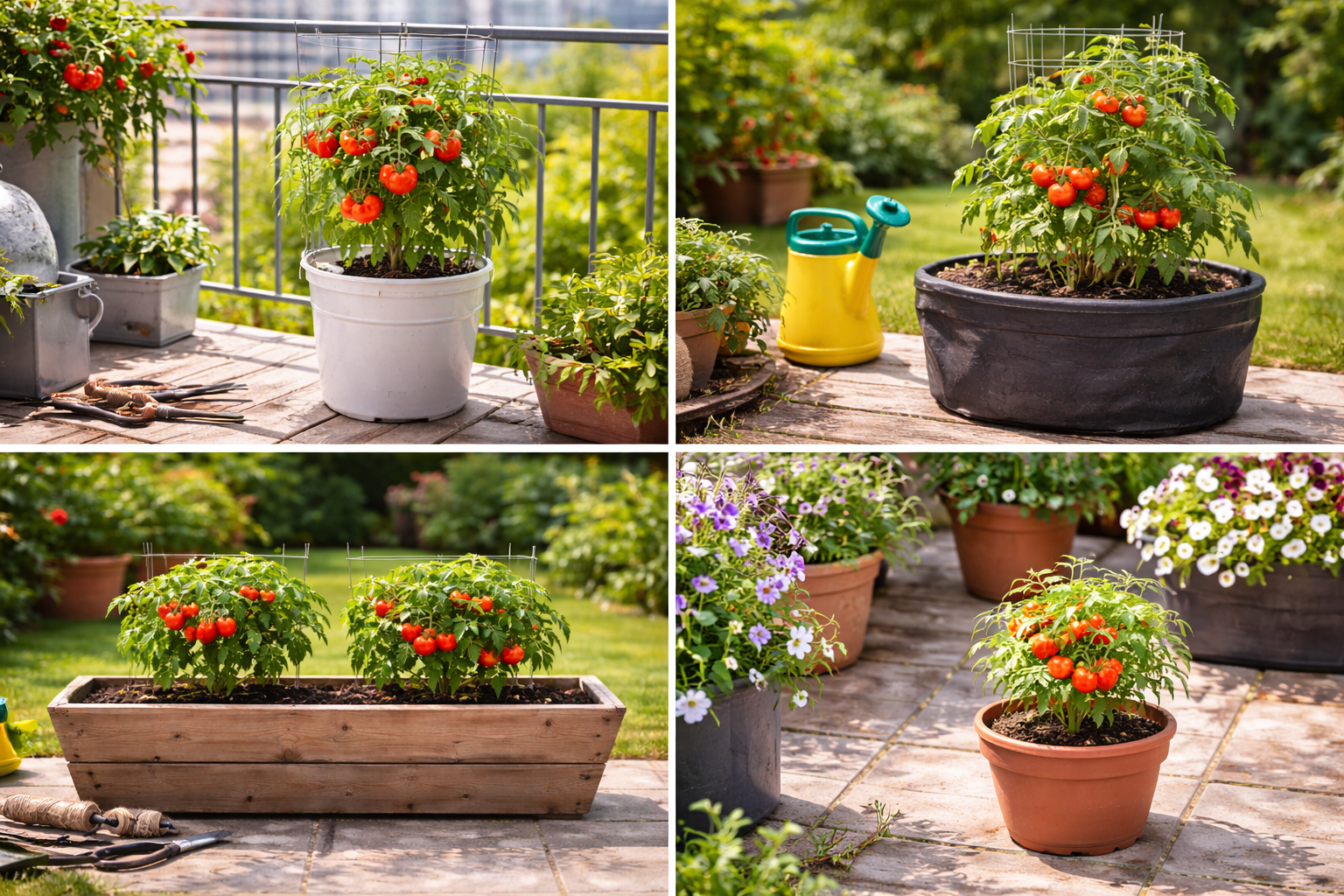
5 gallon bucket:
One tomato plant, not two. Best with compact determinate, patio, or manageable cherry varieties. If you want an indeterminate plant, expect more watering pressure and give it support early.
10 gallon grow bag:
One vigorous tomato is still the smarter choice. You may be able to force more density, but one plant will usually be easier to water, easier to feed, and easier to keep productive.
Long trough planter:
This is one of the few places where two compact tomatoes can make sense. Keep them spaced, stake them early, and do not try this with large indeterminate vines.
Tiny sunny patio:
Pick a dwarf or patio tomato and build the whole setup around simplicity. One plant in the right container beats an overstuffed mini jungle.
Partial-sun balcony:
Choose compact cherries or dwarfs rather than large slicers. When light is limited, crowding a pot becomes even less forgiving.
Weekend-only watering habits:
Go bigger on the container and smaller on the plant. This is not the place to test how much a tomato can tolerate.
Final takeaway
The best plant count is not the maximum number you can squeeze in. It is the number you can keep watered, fed, supported, and productive all season without turning tomato growing into a daily rescue mission.
FAQ
Can I plant basil with a tomato in the same container?
Sometimes, but only if the container is already large enough for the tomato on its own. In borderline pots, the tomato should get the root space. If you want companion planting, it is usually cleaner to keep basil in its own nearby pot.
Is a wide planter better than a deep narrow pot for tomatoes?
Usually yes. Tomatoes benefit from a stable root zone and a container that does not tip easily once the plant gets tall and loaded with fruit. Similar volume is not always equal in practice, and wider containers are often easier to manage.

Michael Rowan is the founder and lead writer at The Garden Playbook. He has spent 10+ years growing plants across a range of settings — from indoor houseplants and container gardens to raised beds and in-ground plots — adapting methods to different light levels, seasons, and growing conditions.
Michael focuses on practical, experience-based guidance grounded in fundamentals: soil health, watering strategy, plant nutrition, pruning and propagation, and integrated pest management (IPM). His work aims to help readers diagnose common problems (such as yellowing leaves, stunted growth, or pest pressure) and apply straightforward solutions that are realistic for home gardeners.
At The Garden Playbook, Michael develops tutorials and plant guides using a consistent process: documenting real outcomes where possible, explaining the “why” behind each step, and verifying higher-risk topics (such as plant toxicity or pest treatment options) against reputable horticultural references.