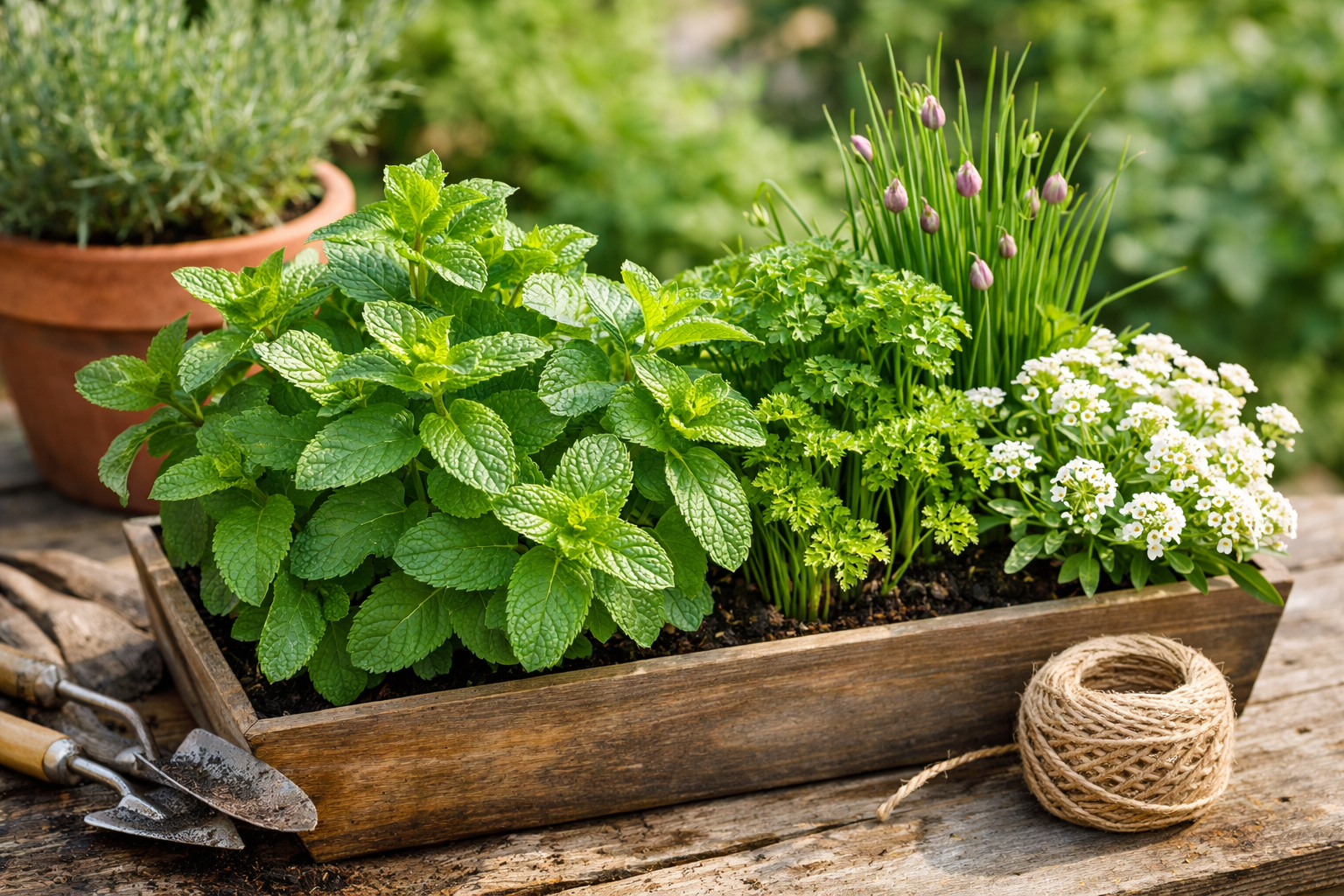
You buy a fresh mint plant, tuck it into a pretty container with a few other herbs, and for a few weeks it looks perfect. Then summer kicks in. The mint starts leaning, then creeping, then swallowing the pot like it paid the rent. I have done this myself with a mixed herb planter that looked balanced in May and looked like a mint monoculture by July.
Here is the useful answer right up front: if you are wondering what to plant with mint in container setups, the safest companions are plants that like evenly moist soil and can handle some competition, such as parsley, chives, and in some cases basil. But in a lot of small pots, mint is still better off alone. That common advice is technically correct, but it is not very helpful unless you know when it applies and when a shared planter can still work.
This guide will help you:
- pick plants that can actually share a pot with mint
- avoid pairings that fail for predictable reasons
- choose the right container size before roots turn the whole thing into a traffic jam
- fix an overcrowded planter without throwing everything out
- decide when mint should be nearby, not in the same container
Key takeaway
In containers, shared water needs matter more than old companion-plant lists. If one plant wants steady moisture and the other wants to dry hard between waterings, the pairing is already working against you.
What to plant with mint in container setups: the short answer that actually helps
The best same-pot companions for mint are plants that like similar moisture, do not mind regular trimming around them, and have enough root room to avoid instant crowding. In practice, that usually means parsley and chives first. Basil can work in warm weather in a roomy planter if you stay on top of watering. Lemon balm can work too, but only in a larger container because it is also a vigorous grower.
What usually does not work is stuffing mint into a classic Mediterranean herb pot with rosemary, thyme, sage, and lavender. Those plants want faster drainage and drier roots than mint does. They may all be herbs, but they do not want the same living conditions. Grouping them because they belong in the same recipes is like picking roommates based on favorite music instead of whether one wants the window open in January.
For most small balcony pots, windowsill planters, and patio containers under about 12 inches wide, mint alone is the cleanest answer. It grows better, it is easier to water correctly, and you do not spend the season trying to stop one plant from bullying the others. If you want a fuller look, the smarter move is often to keep mint in its own pot and set that pot beside other herbs rather than forcing them to share soil.
If your goal is a mixed edible container, choose the companion first by moisture needs, not by flavor pairings. That one rule will save you more frustration than any generic companion chart.
The 3-check test: use this before you pair mint with anything
Before I pair mint with another plant now, I run a simple 3-check test. It is faster than guessing, and it explains most successes and failures.
1. Water check. Does the other plant like evenly moist soil? Mint usually performs best when the potting mix stays lightly and consistently moist instead of swinging from bone-dry to soaked. The University of Maryland Extension also recommends growing mint in a container because of how aggressively it spreads, and notes a pot around 12 to 16 inches in diameter as a good starting point. Plants that want the same steady moisture are the best fit.
2. Vigor check. Can the other plant handle a strong grower beside it? Mint does not just spread below the soil line. It also fills overhead space fast, especially if you water well and harvest often. Delicate or slow growers get shaded and crowded before you realize what happened.
3. Root-room check. Is the container actually big enough for two root systems? This is the one people skip. A pairing that can work in a long trough often fails in a standard patio pot. If the pot is small, the roots are forced into constant competition, and watering becomes harder to get right for both plants.
Here is the decision rule that makes this simple:
- If the other plant likes dry, lean soil, do not pair it with mint.
- If the pot is under 12 inches wide, mint usually gets the pot to itself.
- If the planter is larger, you can pair mint with one or two similar-needs plants if you are willing to trim mint regularly.
Common mistake
People match herbs by how they cook with them. Containers do not care about recipes. They care about moisture, root space, and growth speed.
The best plants to grow with mint in the same container
Once you filter by moisture and vigor, the list gets much tighter, and that is a good thing. It means you are choosing pairings that can actually last.
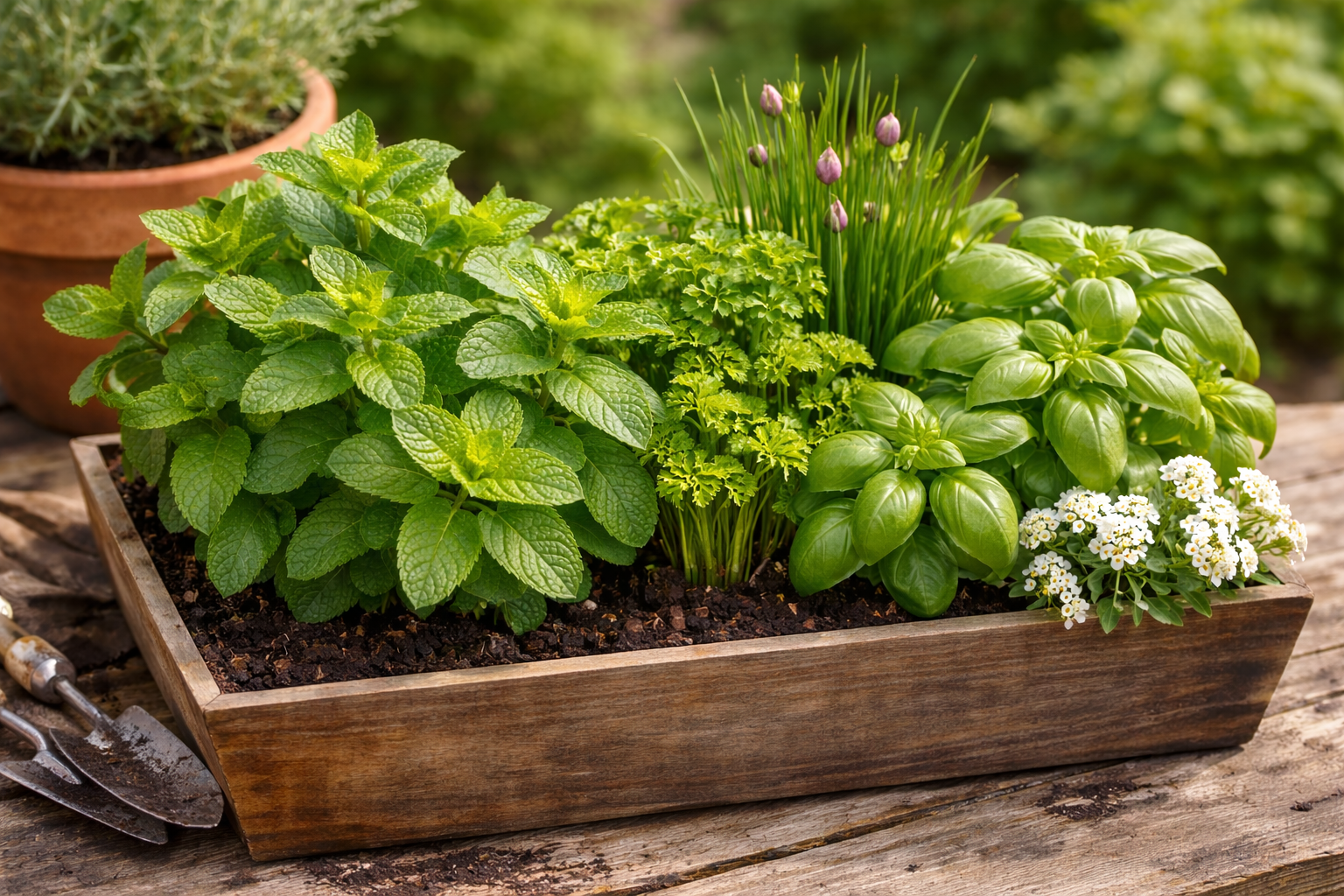
Parsley is one of the best partners for mint in a shared container. It appreciates evenly moist soil, it is useful in the kitchen, and it does not demand the dry, sharp drainage that rosemary or thyme prefer. In my own mixed planters, parsley has been one of the few herbs that does not immediately sulk when mint is nearby, provided the pot is not cramped.
Chives are another strong choice. Their upright, clumping habit helps them hold their own visually, and they do not sprawl into the mint the way softer herbs can. They also fit well in edible containers where you want contrast in texture.
Basil can work, but this is a conditional yes, not a blanket yes. Basil likes warmth and regular moisture, so the watering rhythm can line up. The catch is that basil also needs enough light and air movement to stay healthy. In a crowded pot where mint starts shading the base, basil can lose that battle. If you try this pairing, use a roomy planter and pinch the mint often.
Lemon balm is possible in a larger trough or wide planter, but it is not a low-maintenance pairing. Lemon balm is not shy either, so this works only if you accept routine cutting back and eventually dividing both plants.
Shallow-rooted annual flowers can also work as visual fillers in a larger container. Alyssum and violas are often easier to manage than another vigorous herb because they can sit near the rim and are less likely to start a full underground turf war. If you want a container that looks lush rather than purely edible, this is often the better route.
If mint is your focus and you want it to stay lush without turning invasive, it helps to understand how easy it is to grow once roots, light, and moisture are controlled. This breakdown on whether mint is easy to grow explains that part well.
Key takeaway
The best mint companions are not the plants that merely survive beside mint. They are the plants that want a similar watering schedule and can handle regular pruning around them.
Plants that belong near mint, but not in the same pot
This is where a lot of articles blur two different ideas together. A plant that is often mentioned as a good companion for mint in the garden is not automatically a good same-pot companion in a container.
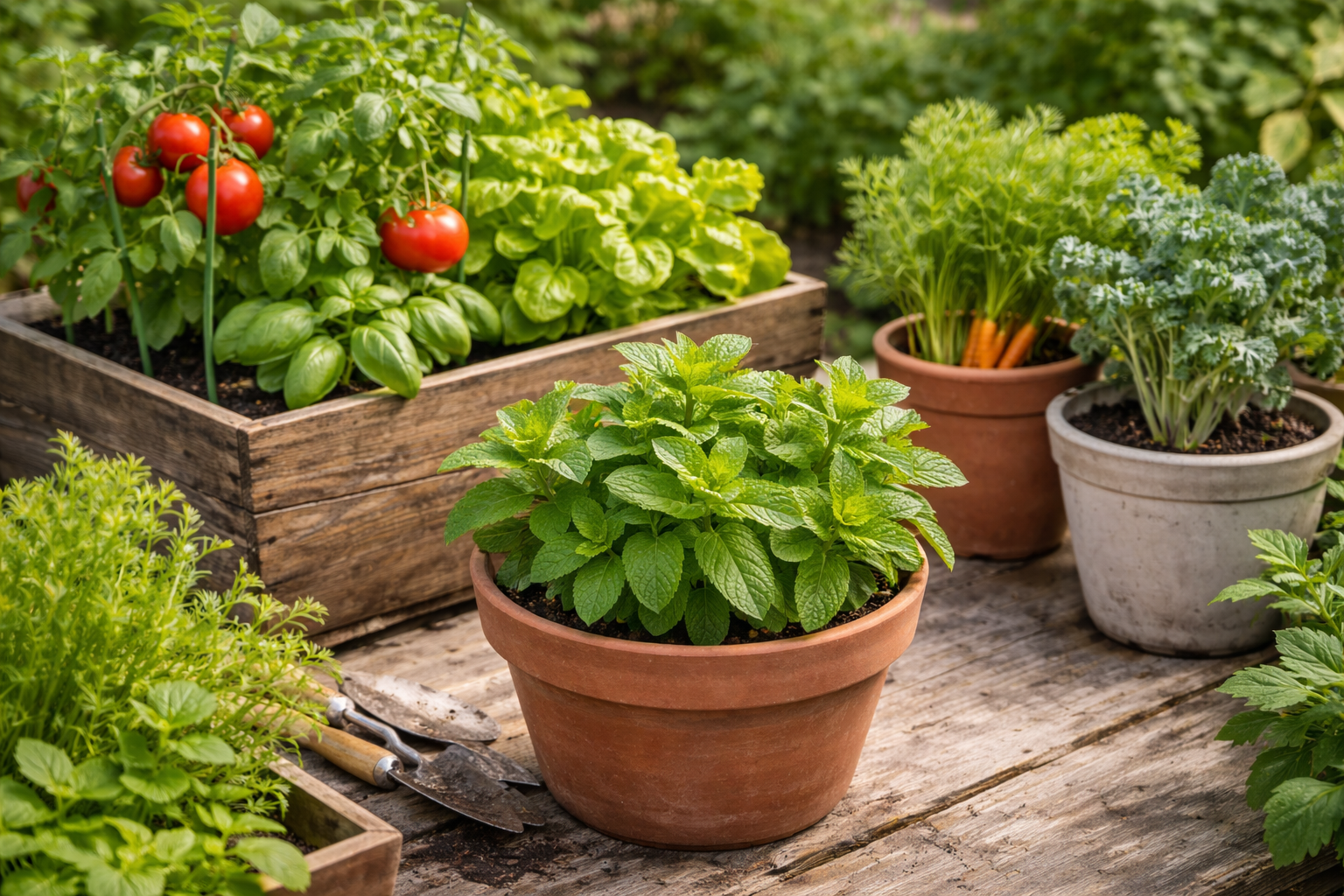
You will often see mint discussed around tomatoes, brassicas, carrots, onions, lettuce, and peas. That nearby relationship is usually about scent, spacing, or traditional companion-planting logic. In a garden bed, roots have more territory and moisture spreads differently. In a container, every plant is arguing over the same small volume of mix.
So if you want mint close to vegetables or other herbs for convenience or experimentation, that is fine. Just keep it in its own pot and place it nearby. That gives you the practical benefit of containment without creating an awkward watering compromise in shared soil.
It is also worth being honest about what companion planting can and cannot promise. Traditional pairings are popular, but not every pest-control claim is strongly proven in home-garden conditions. The University of New Hampshire Extension notes that companion planting is not generally recommended as a reliable pest-management method on its own. That does not make every pairing pointless. It just means you should treat these benefits as possible bonuses, not guaranteed outcomes.
That distinction matters because it keeps the article honest. If a plant benefits from being near mint, great. But in a container, the first job is still giving both plants the right moisture, root room, and light.
Here’s what nobody tells you
“Near mint” and “with mint” are not the same instruction. A pot is a tiny ecosystem. The closer the roots are forced together, the less forgiving bad pairings become.
What not to plant with mint if you want the container to stay balanced
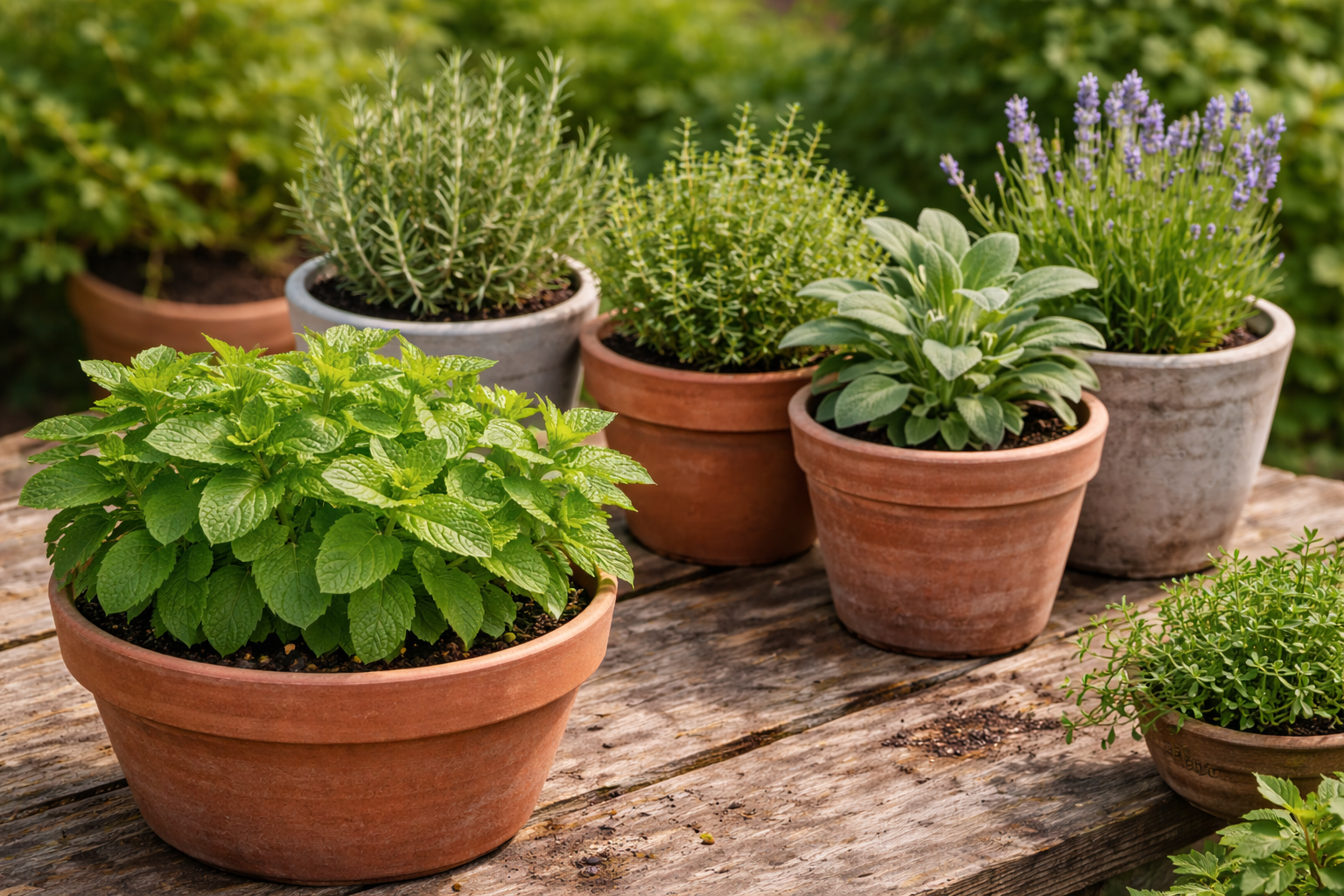
If you want a quick no-list, here it is: rosemary, thyme, sage, lavender, and usually oregano are poor same-pot companions for mint. Another mint variety is also a risky choice unless you want one to dominate or you are prepared to divide often.
The reason is not mysterious. Most of these herbs prefer quicker drainage and drier conditions than mint. Mint likes a more luxurious, moisture-retentive routine. The Royal Horticultural Society makes this difference especially clear when discussing herb containers, noting that chives and mint prefer richer conditions and more frequent watering, and that mint needs its own separate pot because its roots spread quickly among other plants.
Rosemary is one of the classic bad pairings. It wants a leaner, better-drained setup and resents staying wet for too long. If you are trying to build a rosemary container that actually lasts, this guide on what to plant with rosemary in container gardens lays out that dry-loving side of the equation well.
Thyme and sage run into the same issue. They can survive in a mixed pot for a while, especially if the weather happens to suit them, but the long-term compromise usually favors mint. One plant gets conditions it likes. The other gets conditions it tolerates until it does not.
Oregano is a little trickier because some gardeners have made it work, especially in larger containers. But it is still not a pairing I would call forgiving. Both plants are assertive, and oregano generally prefers a drier rhythm than mint. In a wide trough with disciplined pruning, maybe. In a normal herb pot, usually not worth the headache.
Another mint variety sounds fun until you realize one usually wins. Peppermint, spearmint, apple mint, chocolate mint, and other mints do not politely stay in their own corners forever. If your goal is clean harvesting and easy maintenance, separate pots are simpler.
The rule is straightforward: if the companion likes dry feet, woody stems, and sharp drainage, do not put it in mint’s pot.
Container size, layout, and setup rules that make or break the pairing
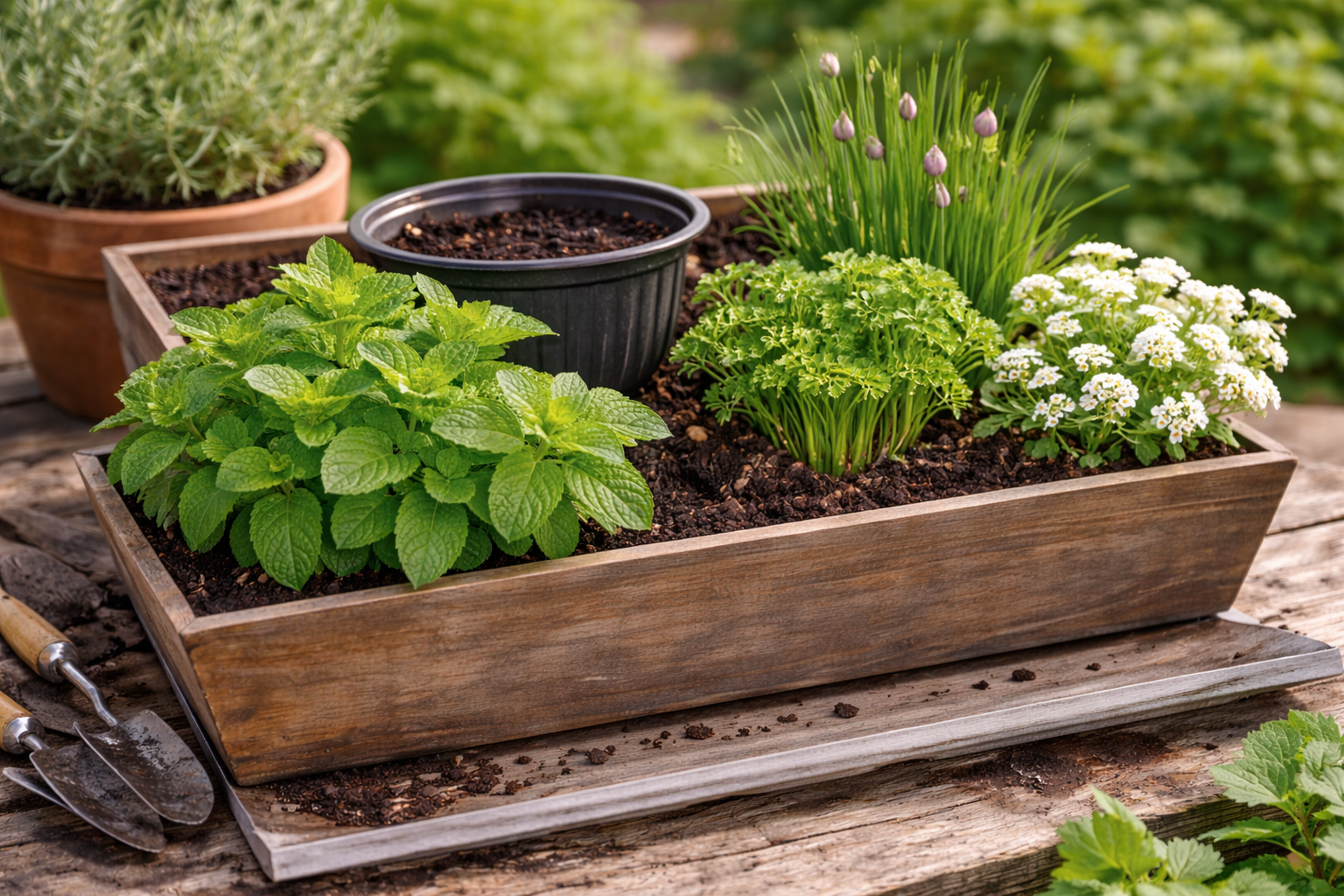
Most bad mint pairings are not bad in theory. They are bad in a container that is too small. That is the real trap.
For one mint plant on its own, a pot around 12 to 16 inches wide is a sensible baseline. That lines up with extension guidance and gives the plant room to grow without drying out every five minutes in hot weather. Once you want to share that container, the minimum needs to go up. I would treat a wide planter or trough around 18 inches across as the point where pairings start becoming realistic rather than cramped.
Layout matters too. If you are combining mint with parsley or chives, place mint at one end or in a spot where you can trim it easily without mangling the rest of the container. In my own planters, putting mint in the center sounded balanced and looked neat for about two weeks. After that, it made pruning awkward and encouraged the plant to push in every direction at once.
Use a real container mix, not garden soil scooped from a bed. Containers need air as much as they need moisture, and dense soil makes both watering and root health harder to manage. Good drainage holes are non-negotiable.
One of the best tricks for readers who want the look of a mixed container without the root battle is this: keep mint inside a plain nursery pot, then slip that pot into a larger display planter with flowers or herbs around it. The roots stay contained, the arrangement still looks full, and you avoid the usual takeover.
These simple setup rules keep things sane:
- One aggressive grower per small pot.
- In larger planters, pair mint with only one or two similar-needs plants.
- Use the rim of the planter for shallow fillers, not another strong herb.
- Prune mint early and often instead of waiting until it has already claimed the space.
Common mistake
Gardeners often assume a healthy-looking spring container has enough space because the top growth still looks tidy. The real crowding usually starts below the soil line first.
If your mint is already taking over, do this instead of starting over
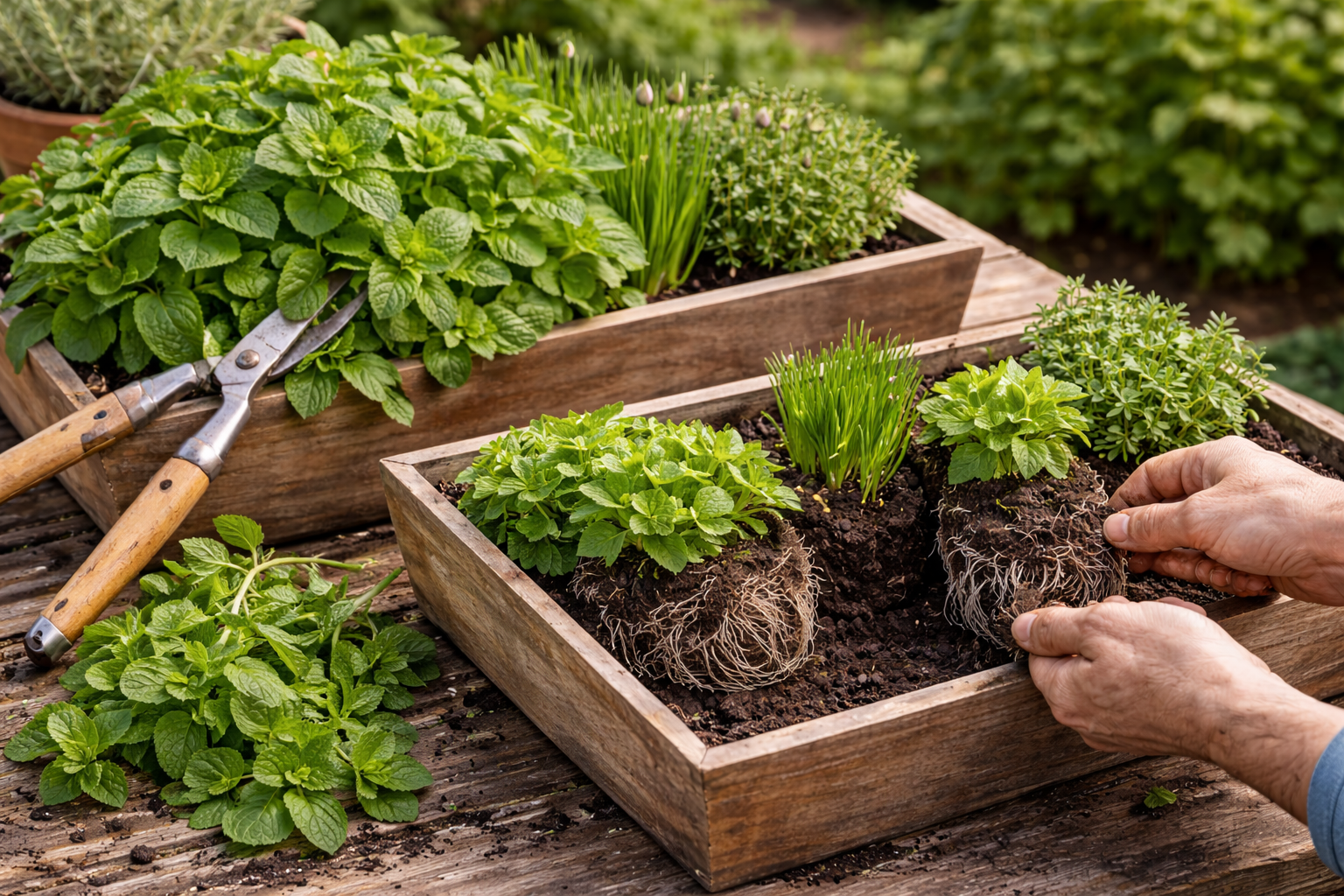
If you already have an overcrowded planter, you do not necessarily need to scrap it. Most of the time, you just need to reduce the mint’s advantage quickly.
Start by trimming the mint hard. Cut back the longest stems and remove any shoots that are spilling over companions or shading the center of the pot. Do not just pinch the prettiest tips. Thin the plant so light and air can reach the rest of the container.
Next, check whether the pot has become root-bound. If roots are circling densely and the soil dries oddly fast or stays wet in patches, lift the plants and separate them. Mint handles division well, and dividing is part of normal maintenance anyway. The Illinois Extension recommends dividing mint every few years to keep plants vigorous, which fits what many container gardeners see in practice.
If the two plants need genuinely different watering rhythms, separate them into different pots. No amount of clever pruning fixes a pairing that wants opposite moisture conditions. If both plants like the same moisture but one is simply getting crowded, you can often rescue the container by dividing the mint, refreshing some potting mix, and re-spacing the remaining plants.
Watch for these signs that the combination is not working:
- one plant wilts much faster than the other
- mint is flopping over and shading the pot center
- the soil feels too wet for one plant and too dry for the other
- harvest size drops because everything is fighting for room
In a mixed herb pot I kept near a back step, the turning point was always the same. Once harvesting felt like digging through one plant to reach the others, the container had already tipped too far toward mint. That is your cue to divide, not to hope it settles down on its own.
The simplest winning setups for different gardeners
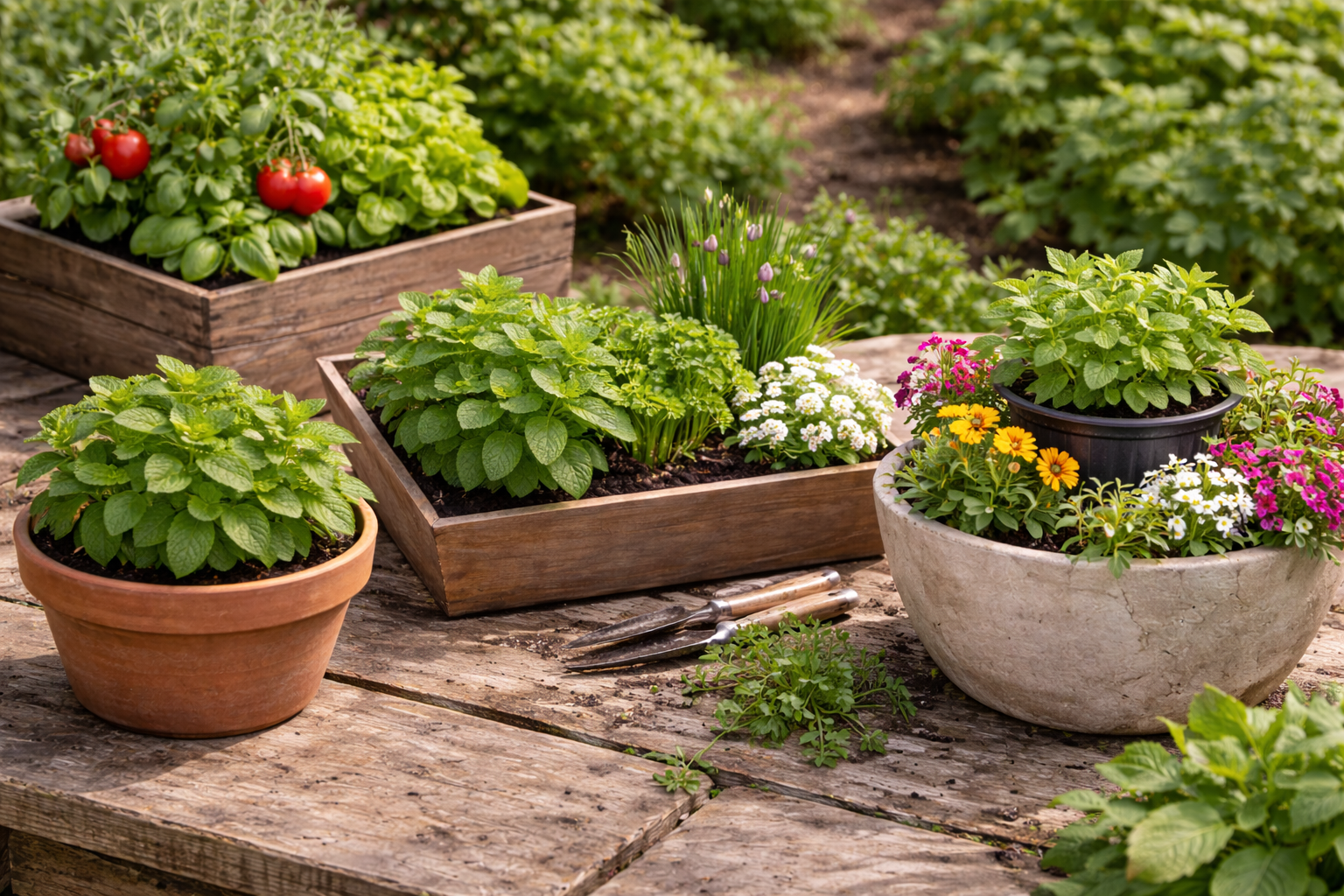
If you want the easiest answer, here it is: plant mint alone in a decent-sized pot and place it near other containers. That solves most problems before they start.
But if you do want a shared container, these are the setups most likely to work:
Small balcony pot: mint alone. This is the least stressful option and the best choice if you are busy, travel in summer, or do not want to micromanage watering.
Kitchen herb trough: mint with parsley or chives. Use a longer planter, keep the mint to one side, and trim it regularly. This gives you a practical harvest mix without forcing dry-loving herbs into the wrong conditions.
Decorative edible planter: mint with a shallow flowering edge such as alyssum or violas. This works well when your priority is looks plus harvest, not a perfectly balanced herb collection.
Larger patio planter: mint in a slip pot inside the main planter, surrounded by annual flowers or another moisture-friendly herb. This is one of the smartest compromises because it gives you the mixed-container look without opening the door to root chaos.
If you like simple decision rules, use this one:
- Want easiest care? Plant mint alone.
- Want a mixed edible pot? Start with parsley or chives.
- Want a lush decorative planter? Contain the mint inside an inner pot.
- Want rosemary, thyme, or lavender involved? Keep mint elsewhere.
The best container pairings are not the fanciest ones. They are the ones that still make sense in August, not just in the garden center car park.
FAQ
Can mint and basil grow in the same container?
Yes, they can, but only if the pot is roomy and you keep up with water and pruning. Basil is a possible partner, not the safest one. If you want the easier pairing, parsley or chives are usually less fussy.
Does mint need a deep pot or a wide pot?
Mint usually benefits more from width than extra depth because it spreads aggressively and fills horizontal space quickly. A decently wide container is often more useful than a narrow deep one.
Can I plant two kinds of mint in one container?
You can, but one often ends up dominating. If you want cleaner harvesting and less maintenance, keep different mint varieties in separate pots.

Michael Rowan is the founder and lead writer at The Garden Playbook. He has spent 10+ years growing plants across a range of settings — from indoor houseplants and container gardens to raised beds and in-ground plots — adapting methods to different light levels, seasons, and growing conditions.
Michael focuses on practical, experience-based guidance grounded in fundamentals: soil health, watering strategy, plant nutrition, pruning and propagation, and integrated pest management (IPM). His work aims to help readers diagnose common problems (such as yellowing leaves, stunted growth, or pest pressure) and apply straightforward solutions that are realistic for home gardeners.
At The Garden Playbook, Michael develops tutorials and plant guides using a consistent process: documenting real outcomes where possible, explaining the “why” behind each step, and verifying higher-risk topics (such as plant toxicity or pest treatment options) against reputable horticultural references.