
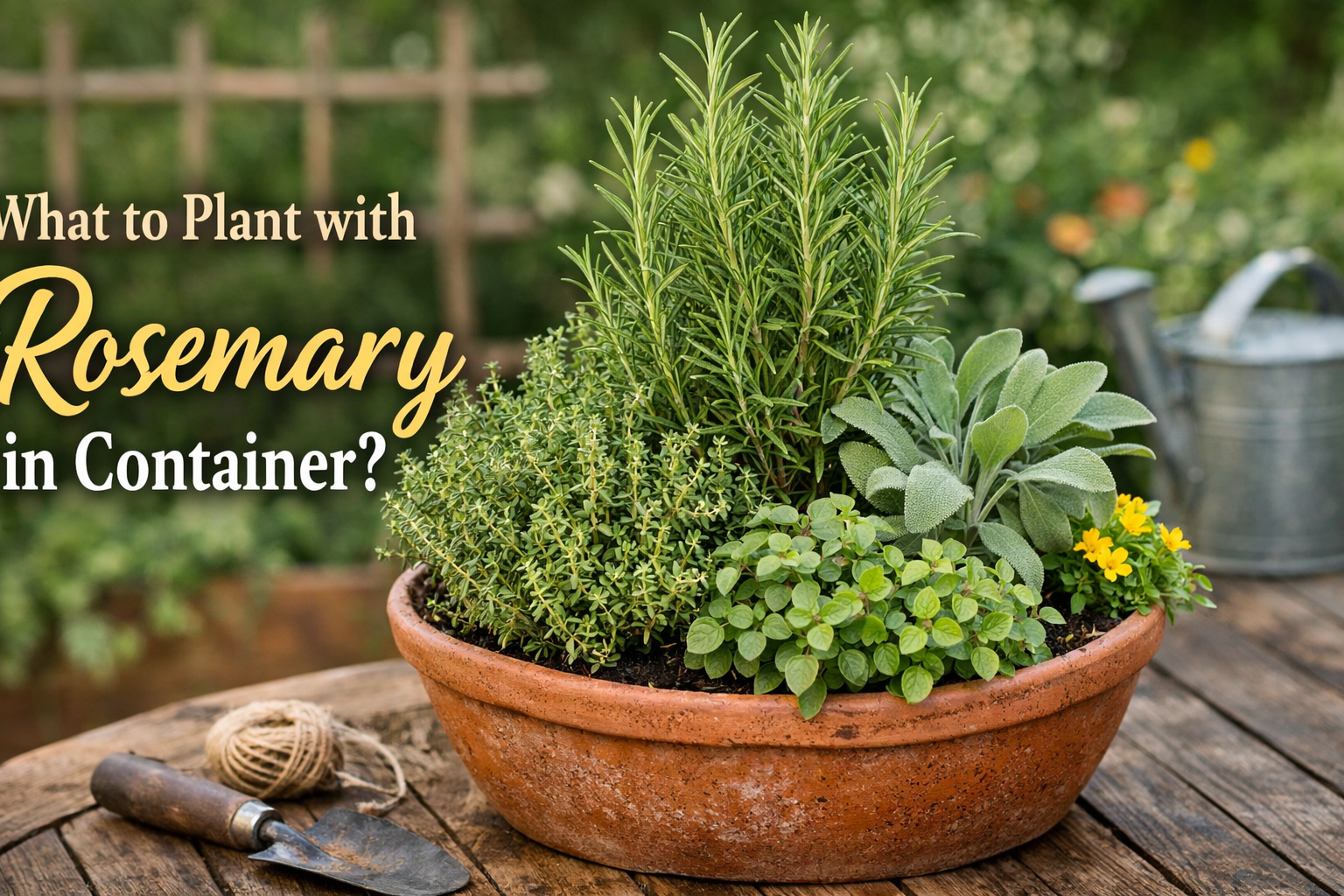
You buy a handsome rosemary plant, tuck it into a mixed herb pot with a few other favorites, water everything together, and for a while it looks like a smart little patio upgrade. Then the basil stays happy, the parsley looks lush, and the rosemary starts acting like the grumpy one in the group. The leaves lose their punch, the center gets woody, and the plant that was supposed to be the easy anchor suddenly looks like it wants out.
Here is the direct answer most people came for: if you are wondering what to plant with rosemary in container setups, the safest choices are dry-loving, full-sun companions like thyme, oregano, sage, marjoram, and savory. In larger planters, alyssum or marigold can also work if the soil still drains fast and you do not crowd the pot. The useful part is knowing when those pairings actually work, when rosemary should be alone, and which plants belong nearby but not in the same container.
That is where a lot of advice goes sideways. The common answer is technically correct, but it is not very useful without context. A “good companion” on paper can still be a bad choice in a real container if the pot is too small, the mix stays wet, or the other plant wants more water than rosemary can tolerate.
What you’ll learn in this guide
- Which plants actually grow well with rosemary in the same pot
- Which herbs are better nearby, but not sharing the same container
- How pot size changes what is possible
- The watering rule that prevents most rosemary failures
- Simple layout ideas for small pots and larger troughs
- How to fix a mixed planter that already looks wrong
What to Plant With Rosemary in Container? Start With the One Rule That Actually Matters
If you remember one thing, make it this: rosemary should be the anchor plant in any shared container. That means every companion in the pot needs to tolerate the same basic conditions rosemary wants, which are full sun, sharp drainage, and soil that dries somewhat between waterings.
Rosemary is not difficult in a container when you treat it like a Mediterranean shrub instead of a thirsty soft herb. The Royal Horticultural Society describes rosemary as a sun-loving plant that prefers free-draining soil and grows well in containers. That lines up with what I have seen in patio planters over and over again. The rosemary pots that stay clean, fragrant, and sturdy are the ones planted lean and watered with restraint. The ones that struggle are usually planted like a mixed salad bowl.
So the right question is not just, “What looks good with rosemary?” It is, “What likes living by rosemary’s rules?”
Key takeaway
If a plant wants consistently moist soil, it is not a true same-pot match for rosemary, even if both are sold in the herb section.
That one rule instantly filters out most bad combinations and makes the good ones much easier to spot.
The Best Companions for Rosemary in a Pot, Ranked by How Easy They Are to Grow Together
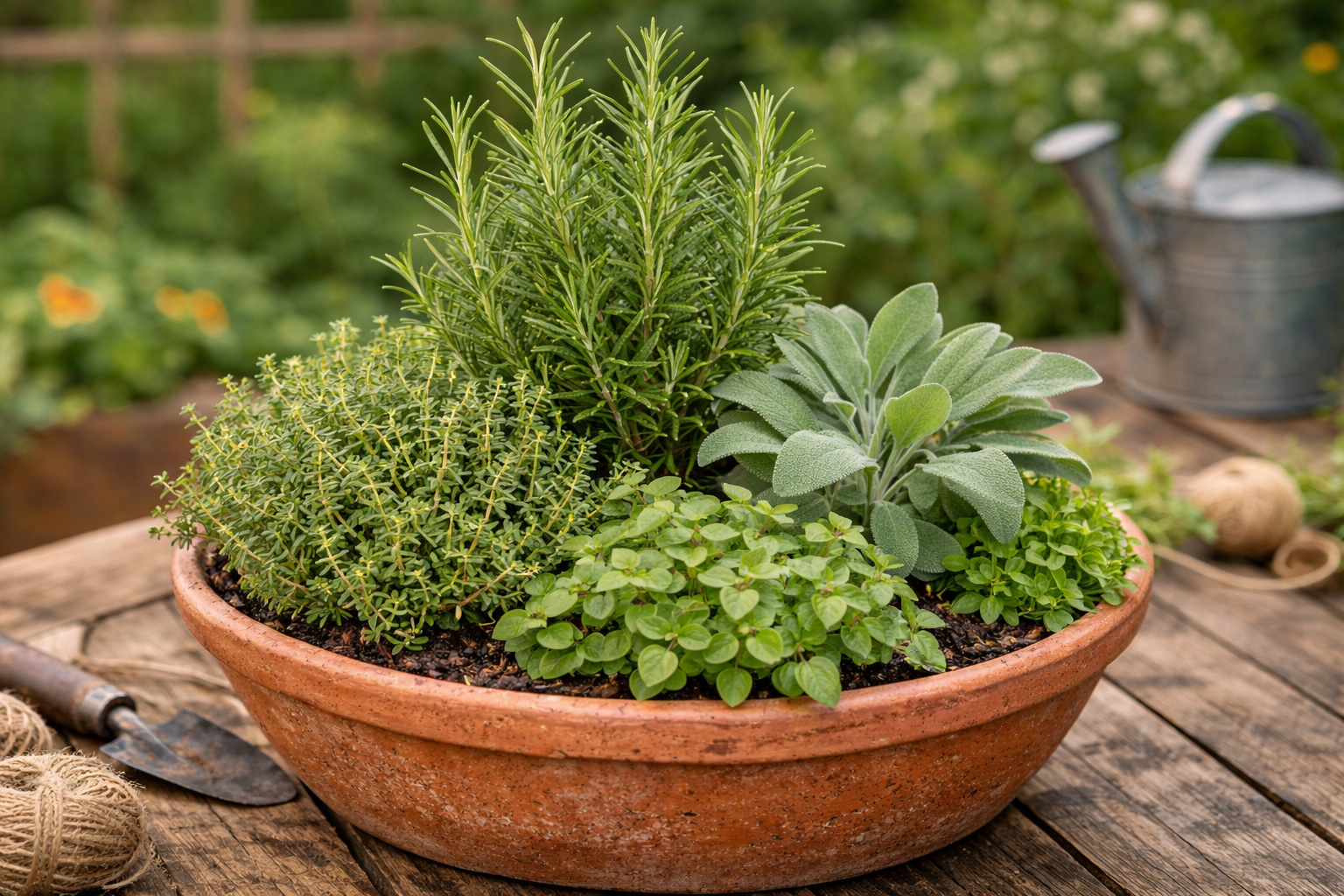
The easiest rosemary companions are the ones that naturally enjoy the same dry side of container life. These are the plants I would reach for first when building a mixed rosemary pot that has a real chance of still looking good a few months from now.
Thyme is the simplest and most reliable choice. It stays low, handles sun, likes fast drainage, and does not bully rosemary at the root zone. If I only had one answer for a small rosemary container, thyme would be it.
Oregano is another strong match. It likes sun and good drainage, and it earns its place fast in a kitchen garden. The catch is that it can spread and soften the edges of a pot quickly, so it works best when you are willing to trim it rather than let it swallow the planting.
Sage works well from a care-needs standpoint because it also leans toward sun and drier conditions. The tradeoff is bulk. In a generous planter, sage and rosemary can make sense together. In a small decorative pot, they start to feel like two people trying to share one airplane seat.
Marjoram and savory are quieter but very sensible matches. Both fit the same basic Mediterranean herb pattern and do not usually create the moisture conflict that causes trouble.
Lavender can work, but this is where people often get overconfident. On paper, lavender and rosemary sound perfect together. In reality, both are woody, both want airflow, and both resent being packed too tightly. In a large trough or roomy planter, fine. In a cramped pot, it is usually more romantic than practical.
For a decorative touch, alyssum or marigold can work in a larger container if the drainage stays sharp and the flowers are not forcing you into frequent watering. I treat those as accents, not primary companions.
The easy ranking
Best for small pots: thyme. Best for kitchen harvests: thyme, oregano, sage. Best for a prettier mixed planter: rosemary with thyme, or rosemary with a light flowering accent in a roomy planter.
The mistake I see most often is choosing companions by recipe logic instead of growing logic. Yes, basil and rosemary taste great in food. No, that does not mean they want to live in the same container.
Pot Size Decides More Than the Plant List
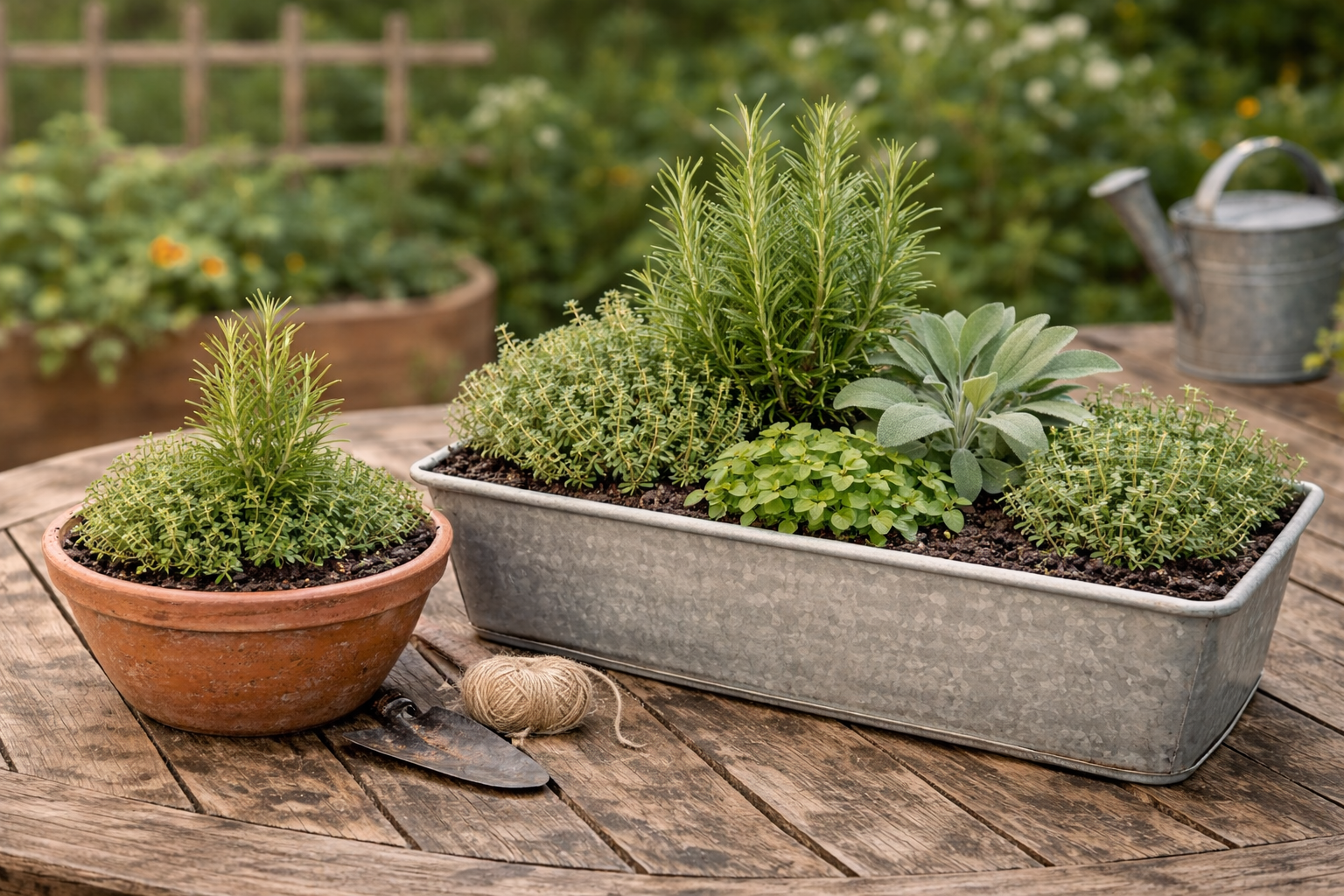
A lot of container gardening advice makes mixed planting sound more flexible than it really is. Compatibility matters, but size decides whether compatibility has room to work.
Rosemary is often sold small, which tricks people into treating it like a filler. It is not filler. It is the main structure plant. According to the NC State Extension Plant Toolbox, rosemary is well suited to containers and prefers well-drained conditions, which is exactly why size matters so much. In a tiny pot, moisture swings are more extreme, roots have less oxygen, and even a “good” pairing gets less forgiving.
Here is the simple way to think about it:
- If the pot is around 12 inches wide and deep, rosemary is usually best alone or with one restrained companion like creeping thyme.
- If the planter is noticeably larger than that, you can pair rosemary with one or two dry-loving herbs, provided they still have space between them.
- If you are using a large trough, leave roughly 6 to 8 inches between plants so air can move and the foliage is not constantly touching.
Those are not magic numbers. They are practical decision points. The bigger the planter, the more room you have for the soil to drain and for each plant to keep its own root space. The smaller the planter, the more one bad watering pattern affects everything.
I have tested this the hard way with balcony planters. A rosemary plus thyme combo can look easy in a wide box planter because the thyme trails and the rosemary keeps its upright shape. Put rosemary, sage, and oregano into a small round pot because they all “like sun,” and it quickly turns into a crowded, damp-center mess that never dries evenly.
Common mistake
A mixed herb combo that might survive in a large trough can fail fast in a small decorative pot. Pot size is not a side detail. It changes the entire risk level.
How to Choose the Right Companion in 30 Seconds
If you want a fast filter, use these four questions before anything shares a rosemary pot:
- Does it like full sun?
- Can it handle drying a bit between waterings?
- Is it comfortable in well-draining potting mix instead of constantly moist soil?
- Will it stay manageable, or is it going to crowd rosemary within one season?
If the answer is yes to all four, it is probably worth considering. If the answer is no to even one, put it in a separate container nearby.
This is the part nobody tells beginners clearly enough: not all herbs want the same care. Garden centers often sell herbs side by side in neat little pots, which makes them look interchangeable. They are not. Rosemary is the roommate who wants bright light, open windows, and a dry floor. Basil wants more regular moisture. Mint wants even more. Parsley is usually happier with steadier water than rosemary wants to see in the same root zone.
Use these if/then rules to make the decision easier:
- If your patio is hot, sunny, and exposed, thyme and oregano are usually your easiest companions.
- If your pot is shallow or compact, keep rosemary alone or pair it with only one low grower.
- If you want softer, lusher herbs like parsley, basil, or cilantro, grow them in their own containers nearby.
- If you travel often and sometimes miss watering, rosemary with other dry-loving herbs is far safer than rosemary mixed with moisture lovers.
That nearby-but-separate option is underrated. You still get the look of an herb grouping without forcing different plants into the same watering schedule.
What Not to Plant With Rosemary in the Same Container
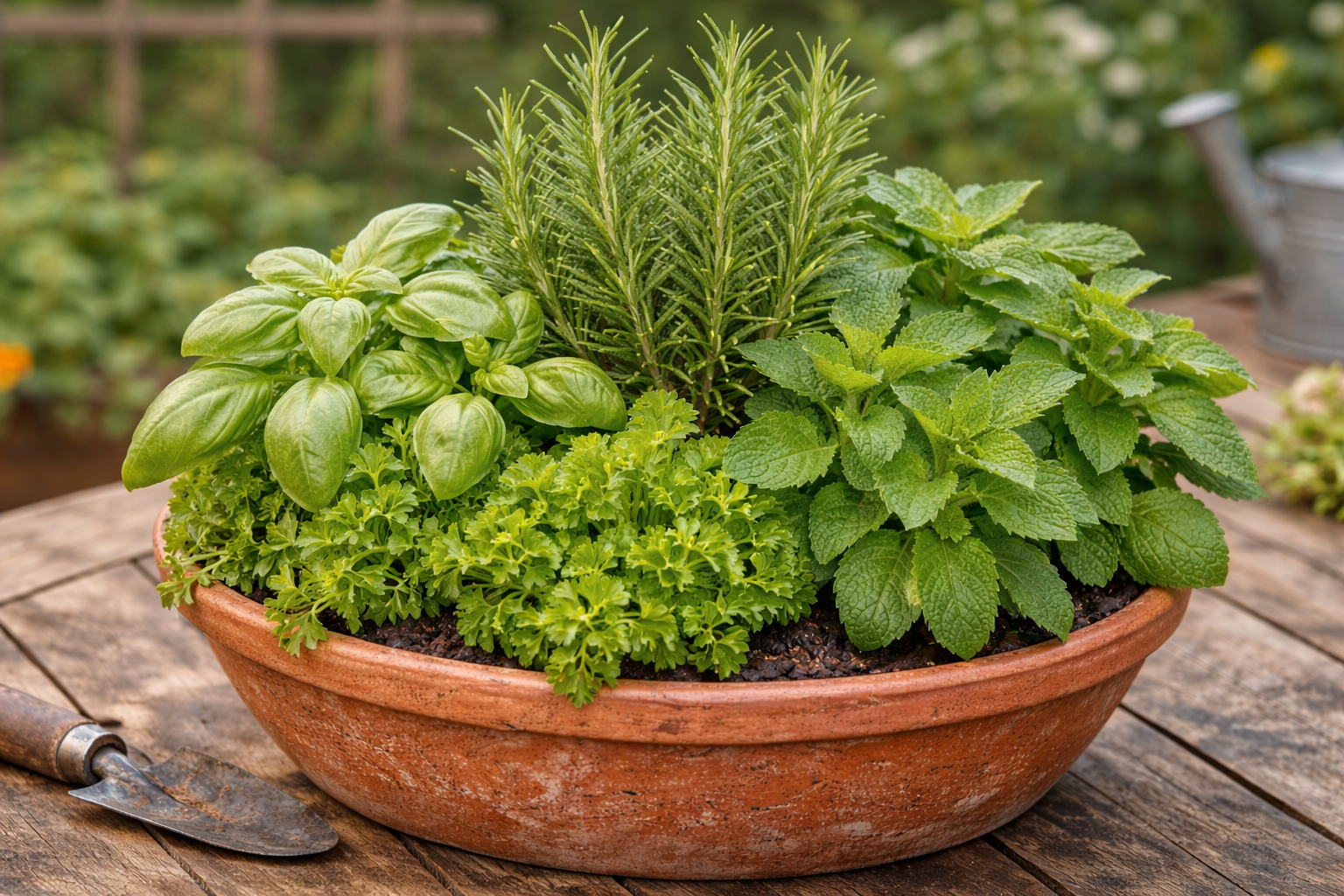
The most common bad pairings are not bad because the plants dislike each other. They are bad because they ask you to water the pot in opposite ways.
Basil is the classic example. It is tender, fast-growing, and noticeably happier with more regular moisture than rosemary. In the same pot, you end up watering for basil and stressing rosemary, or watering for rosemary and stalling basil.
Mint is another poor same-pot choice. It wants more moisture, and it also spreads aggressively enough to become the boss of the container. If you want mint, keep it separate. In fact, mint is best in its own pot for reasons that go well beyond rosemary. It is simply easier to manage that way.
Parsley and cilantro usually lean too far toward steady moisture to be ideal rosemary partners in one container. They are not impossible to grow nearby, but they are poor candidates for sharing the same root zone.
Dill can also be awkward in many mixed containers because it grows fast, can get leggy, and is not a natural fit with a woody, drier rosemary setup.
Moisture-loving vegetables, including cucumbers, are an even bigger mismatch. Their root needs and watering rhythm belong in a different kind of container plan.
Key takeaway
“Not a good companion” often means “not in the same pot,” not “never grow these plants near each other.” Separate containers solve a lot of problems.
If you already planted rosemary with basil, mint, or parsley and the soil is staying damp, do not wait for a dramatic collapse. Separate them early. Rosemary usually gives you warning signs before it fully fails, but once the roots sit wet for too long, recovery gets slower and less certain.
The Potting Mix, Drainage, and Watering Setup That Makes These Pairings Work
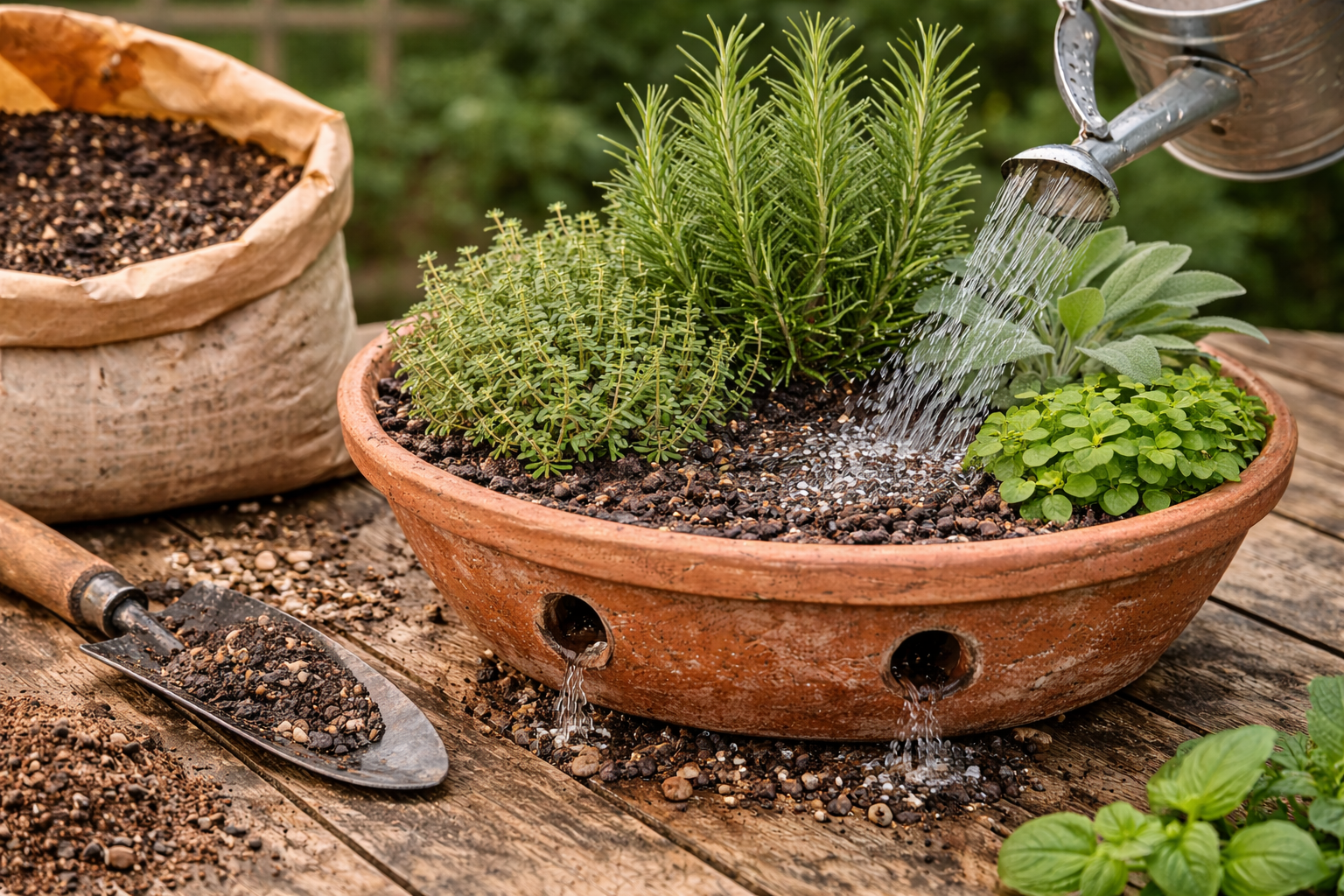
Even the best companion list is useless if the potting setup is wrong. This is where most container failures actually begin.
Rosemary wants a container mix that drains quickly and lets oxygen reach the roots. Dense soil, heavy garden dirt, or moisture-retentive setups that stay wet too long make rosemary far less forgiving. The Missouri Botanical Garden notes that rosemary performs best in full sun with dry to medium moisture and well-drained soil, which is exactly why heavy, soggy containers cause so many problems.
Here is what to do:
- Use a real potting mix made for containers, not scooped garden soil.
- Make sure the container has drainage holes. Not one tiny pinhole. Real drainage.
- Do not let the pot sit full of trapped water after watering or rain.
- Water deeply, then wait until the mix has dried somewhat before watering again.
The most useful moisture test is not the surface. The top can look dry while the lower root zone is still wet. Push a finger into the mix a bit deeper, or learn the weight of the pot when freshly watered versus partly dry. After a couple of weeks, you stop guessing and start reading the planter properly.
I also like to watch the base of the rosemary itself. When the center stays damp, shaded, and crowded, the plant often loses that clean, resinous look. The foliage may dull, and new growth can feel less lively. That is usually a signal to water less often, improve airflow, or thin the companion planting.
Safety note
Decorative pots without drainage can quietly sabotage rosemary. Even if the planting looks stylish from above, trapped water below is enough to stress the roots.
If your climate is rainy, this matters even more. A pairing that behaves perfectly in a dry, hot stretch can turn problematic in a run of wet weather if the pot cannot shed water quickly.
Best Container Layouts: Small Pot, Large Pot, and Trough
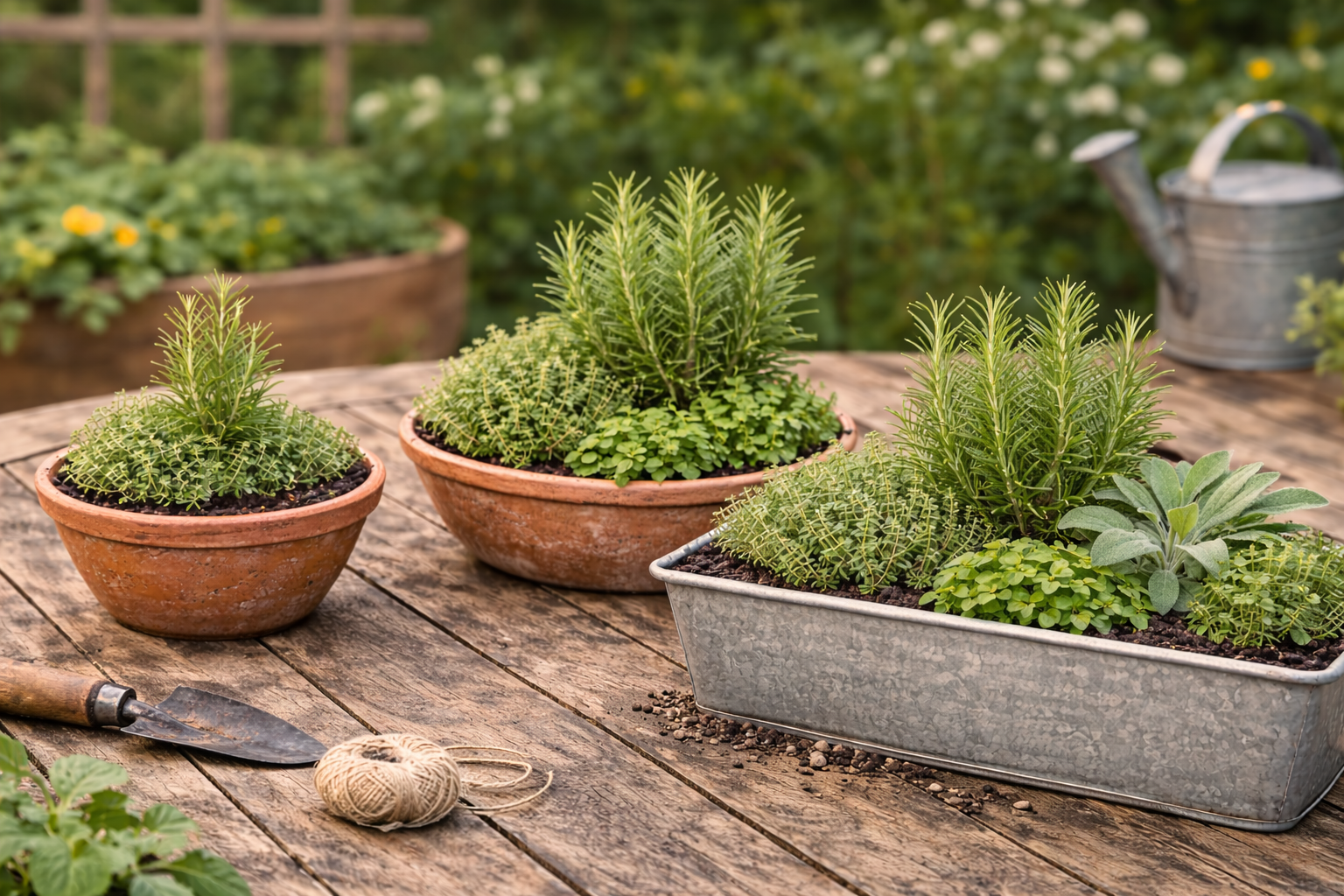
The right layout makes a mixed rosemary planter easier to manage and better looking at the same time. This is less about decoration than about airflow, root room, and not forcing rosemary into a leafy traffic jam.
Small pot layout
Use rosemary alone, or rosemary with one restrained edge plant like thyme. Keep rosemary slightly off-center if the companion trails. This gives the rosemary room to hold its shape while the thyme softens the edge.
Medium planter layout
Use one rosemary and one dry-loving companion such as oregano or marjoram. Give them visible breathing room. If you plant them shoulder to shoulder because the pot looks sparse at first, you are designing for week one instead of midsummer.
Large trough layout
Use rosemary as the upright anchor, with thyme near one edge and oregano or another dry-loving herb spaced well away from the base. Leave roughly 6 to 8 inches between plants when possible so the foliage is not constantly touching and the soil can dry more evenly.
The best visual pattern is usually upright in the middle or slightly off-center, trailing near the edge, and open space between crowns. The worst pattern is a dense ring around the rosemary base. That traps humidity, limits airflow, and makes the middle of the container harder to read when you are checking moisture.
I have replanted enough crowded herb bowls to say this confidently: a mixed planter almost always looks a little too sparse at the start and a little too full later. Trust the later version.
Common mistake
Packing the container for instant fullness usually creates a damp, crowded center by summer. Give woody herbs more space than feels necessary on planting day.
If Your Climate or Setup Changes, Your Best Rosemary Companion Changes Too
Good rosemary pairings are not fixed in stone. Climate, exposure, and even the kind of balcony or patio you have can change what works best.
In a hot, sunny, dry setup, rosemary with thyme, oregano, marjoram, or savory is usually straightforward. Those plants all understand the same basic deal: lots of sun, fast drainage, no constant dampness.
In a humid climate, I get more cautious. Even if the companion plant is technically compatible, I want more airflow and less crowding. That usually means fewer plants per container, more spacing, and more willingness to keep rosemary by itself if the pot tends to stay moist after rain.
In cooler climates where rosemary is moved or protected in winter, a solo container can be easier to manage. One plant, one watering rhythm, one light adjustment. That is especially useful if the rosemary comes indoors or under cover while other herbs do not.
On balconies with reflected heat from walls or paving, the dry-loving companions tend to shine because the pot dries quickly. On shady patios, mixed rosemary pots are harder to keep happy because the light is weaker and the mix stays damp longer. In those settings, giving rosemary its own pot often produces a cleaner result.
Think of the climate as a multiplier. In ideal rosemary weather, you can get away with a bit more. In damp or low-light conditions, the same mixed pot becomes less forgiving.
Common Rosemary Container Mistakes That Make Good Pairings Fail
When a rosemary container goes wrong, it is usually not because the plant is mysterious. It is usually because one simple rule got ignored.
Mistake 1: Pairing by cooking habits instead of growing habits
A pot full of favorite herbs sounds smart until the watering needs split in opposite directions. Fix it by grouping plants by moisture preference, not by what tastes good together.
Mistake 2: Using a pot that is too small
Small containers dry fast at the top and stay oddly wet lower down, which makes watering harder to judge. Fix it by giving rosemary real root room and reducing the number of companions.
Mistake 3: Using a rich, water-holding mix
Too much moisture around the roots turns even a good pairing into a slow decline. Fix it with a lighter, better-draining container mix and a pot with proper drainage holes.
Mistake 4: Watering on a schedule instead of by dryness
Rosemary does not care that it is “watering day.” It cares whether the root zone has started to dry. Fix it by checking the mix and the weight of the pot before you water.
Mistake 5: Crowding the base
Dense foliage around rosemary holds moisture and limits airflow. Fix it by thinning companions, trimming spreaders, or replanting with more distance.
Mistake 6: Forcing moisture lovers into the same container
This is where basil, mint, parsley, and similar herbs start making rosemary miserable. Fix it by moving them into separate pots nearby.
Quick rosemary container checklist
- Full sun
- Fast-draining potting mix
- Real drainage holes
- Companions that tolerate drier conditions
- Enough spacing for airflow
- Water by feel, not by calendar
If you follow that checklist, most of the confusion around rosemary companions disappears. The plant stops feeling fussy because the conditions finally make sense for it.
The Simple Bottom Line for Rosemary Companion Planting in Pots
If you want the shortest useful answer, plant rosemary with thyme first, oregano second, and other dry-loving Mediterranean herbs only when the container is big enough to give them room. Keep basil, mint, parsley, cilantro, and other thirstier herbs out of the same pot. If there is any doubt, let rosemary set the rules.
That is the piece that saves the most frustration. Rosemary is not a great team player with plants that want constant moisture, but it is an excellent anchor for a sunny, free-draining container built around the same dry-side logic. Once you choose companions by conditions instead of by convenience, the whole planter gets easier to manage.
And if your pot is on the small side, there is no shame in giving rosemary a container of its own. In many real patios and balconies, that is not the boring option. It is the smart one.

Michael Rowan is the founder and lead writer at The Garden Playbook. He has spent 10+ years growing plants across a range of settings — from indoor houseplants and container gardens to raised beds and in-ground plots — adapting methods to different light levels, seasons, and growing conditions.
Michael focuses on practical, experience-based guidance grounded in fundamentals: soil health, watering strategy, plant nutrition, pruning and propagation, and integrated pest management (IPM). His work aims to help readers diagnose common problems (such as yellowing leaves, stunted growth, or pest pressure) and apply straightforward solutions that are realistic for home gardeners.
At The Garden Playbook, Michael develops tutorials and plant guides using a consistent process: documenting real outcomes where possible, explaining the “why” behind each step, and verifying higher-risk topics (such as plant toxicity or pest treatment options) against reputable horticultural references.