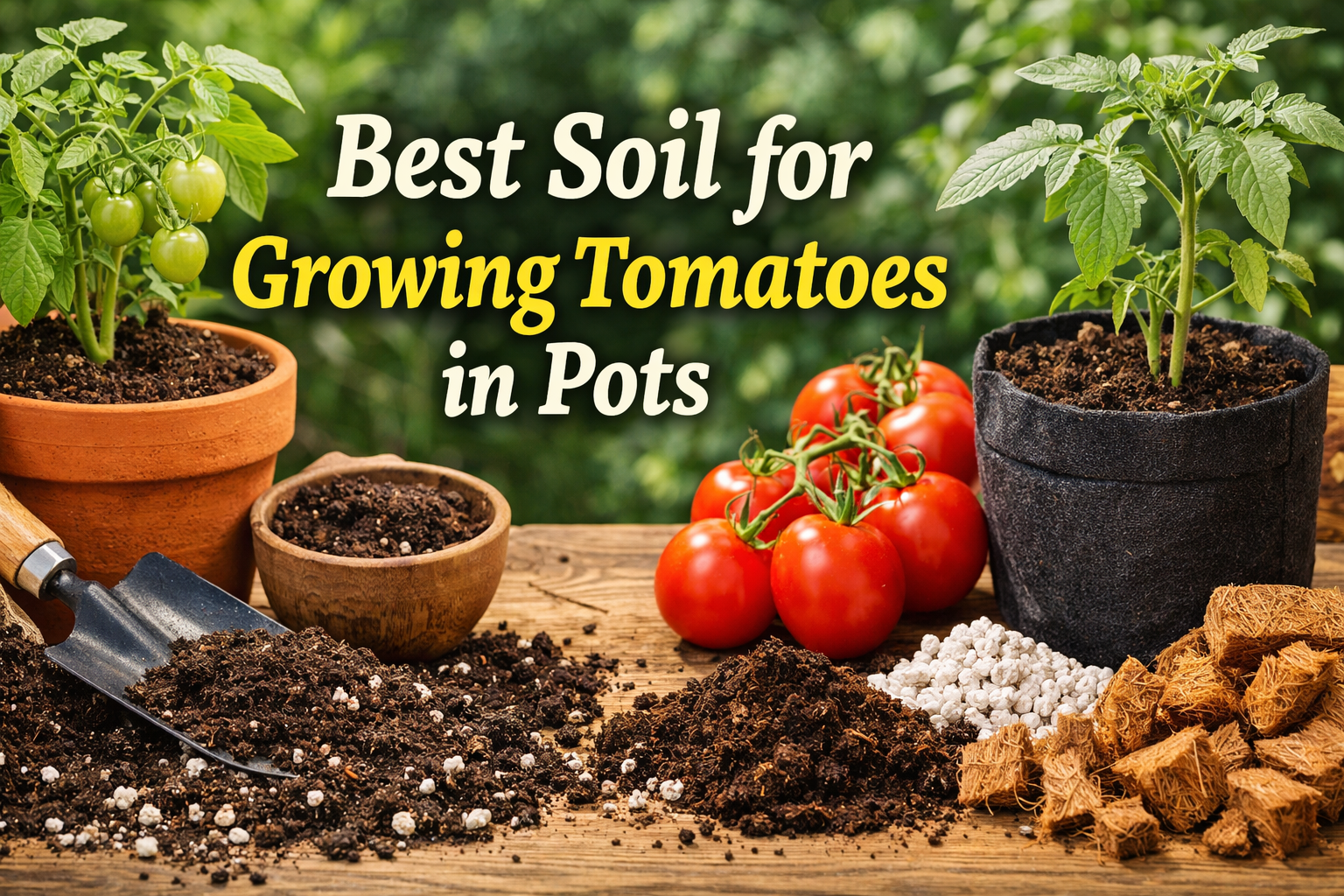
You buy a healthy tomato transplant, fill a pot with what looks like good soil, water it faithfully, and for a couple of weeks everything feels easy. Then the plant starts acting dramatic. It wilts by midafternoon, the leaves yellow for no obvious reason, or the first fruit develops that ugly black patch on the bottom. At that point, most gardeners do what I used to do: blame the weather, the fertilizer, or the variety. More often than not, the problem started with the growing medium.
Here is the direct answer: the best soil for growing tomatoes in pots is a light, well-draining potting mix made for containers, with enough organic matter to hold moisture but not so much that the roots stay wet and airless. In practice, that usually means a quality container mix used on its own or improved with a modest amount of compost, plus a feeding plan for the season.
That is the correct answer, but on its own it is still a little too neat. One mix can behave beautifully in a 20-gallon plastic pot and turn into a headache in a fabric grow bag on a blazing patio. The useful part is knowing what “good potting mix” actually feels like, when to tweak it, and which common add-ins quietly make potted tomatoes worse instead of better.
- How to choose a tomato-friendly potting mix without overthinking the bag labels
- What tomato roots actually need in containers, and why “rich” soil is not always better
- How much compost to add, and when too much becomes the problem
- How to adjust the mix for hot climates, rainy weather, fabric pots, and self-watering planters
- How to test a mix before your plant starts struggling
- What to fix when your tomato pot stays soggy, dries too fast, or produces weak fruit
Key takeaway:
The best tomato soil in pots is not the darkest, heaviest, or most compost-rich mix on the shelf. It is the one that holds enough moisture to buy you time between waterings while still letting roots breathe.
A couple of our favorites are FoxFarm Potting Soil and Wiggle Worm such as these:
| Image | Product | Rating | Price |
Our Pick
1 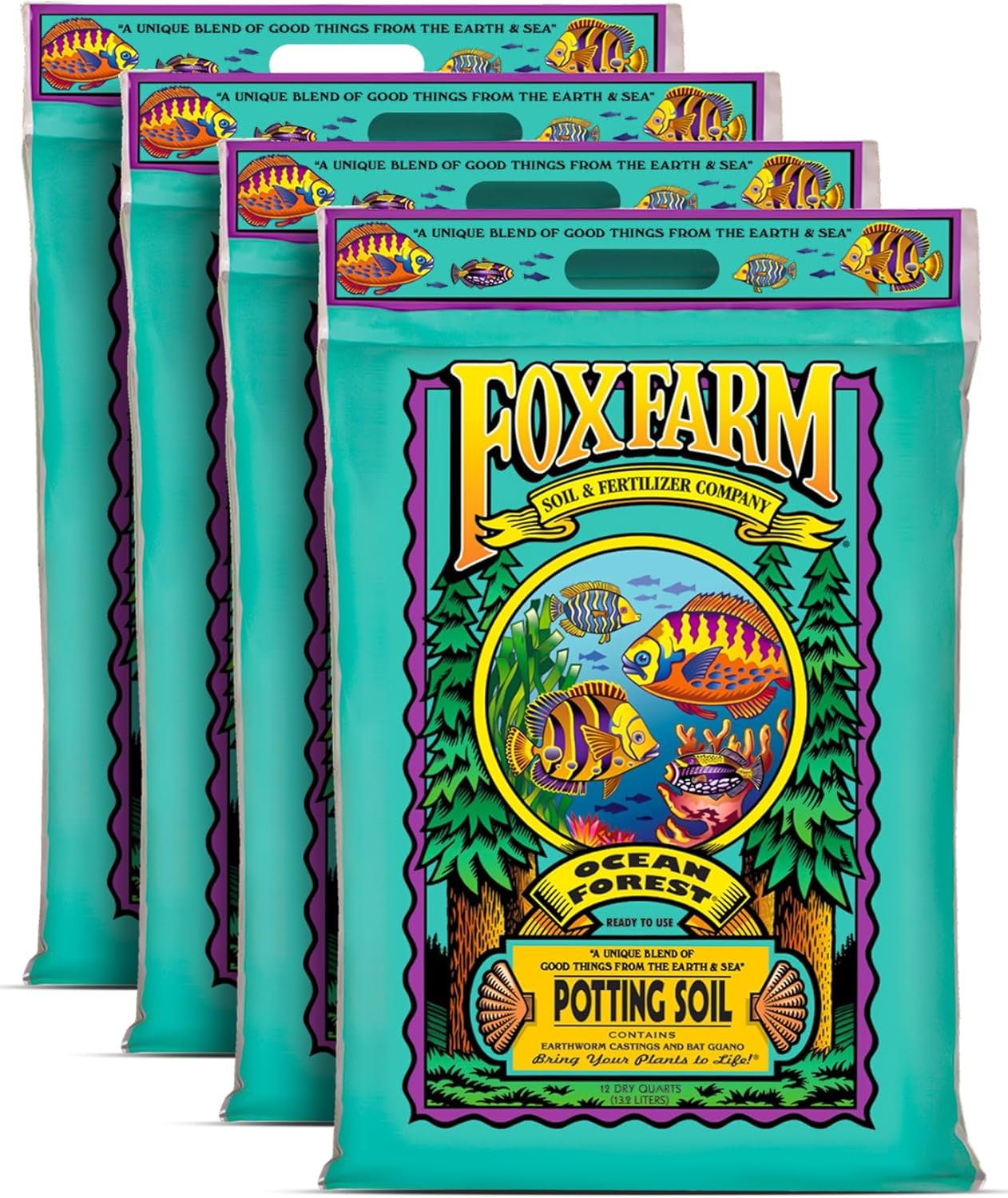 | FoxFarm Ocean Forest Potting SoilLight, Aerated Texture with Fish Meal, Crab Meal, Earthworm Castings – Houseplant Potting Mix for Seedlings & Plant Starts |
10 | |
Another Good Pick
2 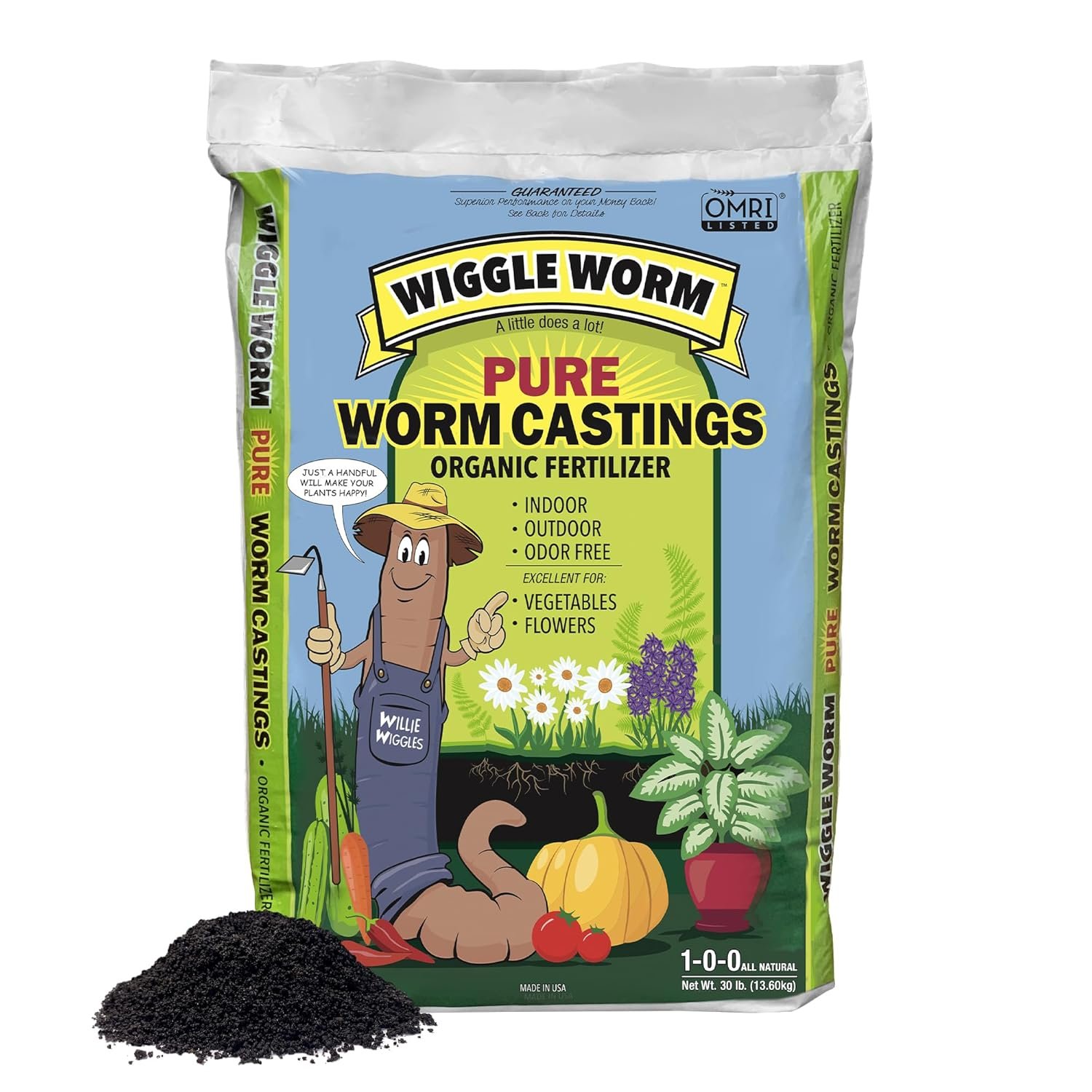 | Wiggle Worm100% Pure Organic Mineral-Dense Worm Castings Fertilizer |
9 |
They are extremely well known in the industry for their quality and cheap prices.
The best soil for growing tomatoes in pots, in one useful answer
If you want the short version you can use right now, use a high-quality potting mix designed for containers, not garden soil and not topsoil. If you want to improve it, mix in about 20 to 30 percent compost for most setups. That range gives you better moisture buffering and organic matter without turning the whole pot into a dense, wet sponge.
I have tested this the hard way over several seasons in plastic nursery pots, glazed containers, and fabric grow bags. The mixes that performed best were never the ones that looked richest in the bag. They were the ones that stayed open and airy after repeated watering, especially once the tomato roots filled the container and summer heat started pushing everything to the limit.
A good container mix for tomatoes should do four things well:
- Drain excess water quickly
- Hold enough moisture that the root zone does not swing from soaked to dusty in a day
- Leave enough air around the roots
- Support steady feeding over a long season
If your mix misses even one of those jobs, tomatoes usually let you know. They are vigorous plants, but in containers they are not forgiving. The root zone is limited, the temperature swings are sharper, and every watering decision matters more.
If you are still choosing a plant to grow, it also helps to match the mix to the plant size. Compact varieties are simply easier to manage in containers. If you are deciding between plant types, this guide to the best tomato varieties for containers will save you a lot of trial and error before soil even enters the picture.
What tomato roots actually want in a pot
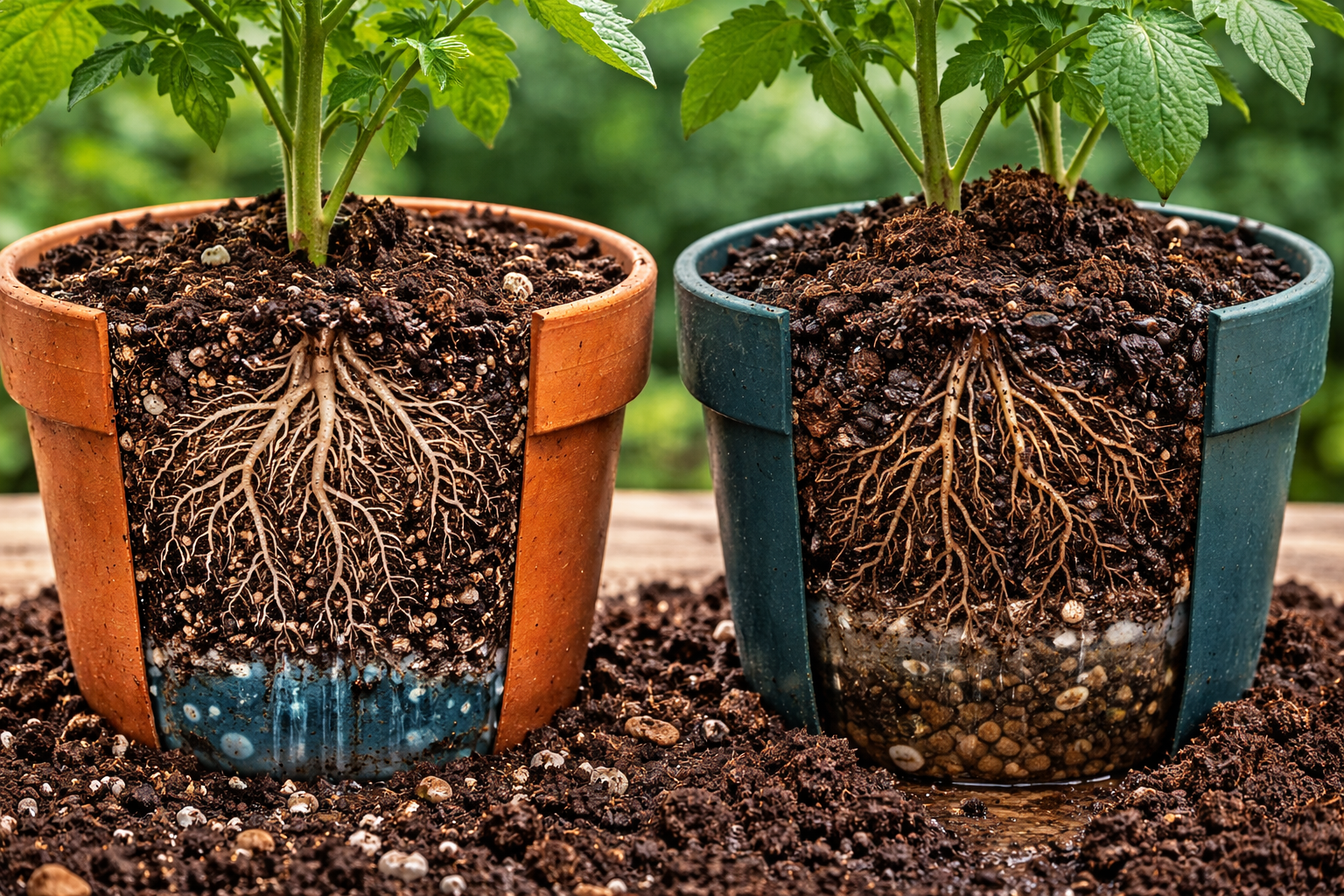
Tomato roots in the ground can chase moisture and oxygen across a wide area. Tomato roots in a container cannot. That is the whole game.
In a pot, the soil has to do three jobs at the same time: hold moisture, drain excess water, and keep little pockets of air around the roots. Think of it like a sponge rather than a brick. A brick stays solid and suffocating when wet. A sponge holds water, but it still has internal space. That is much closer to what tomato roots want.
This is why garden soil fails so often in containers. In the ground, native soil structure is supported by the surrounding earth, soil life, and broader drainage patterns. In a pot, the same material often compacts, drains poorly, and becomes dense after repeated watering. The root system then has to function in something closer to mud than a healthy growing medium.
Tomatoes also prefer a slightly acidic growing medium. According to Cornell’s tomato growing guide, a pH around 6.2 to 6.8 is a good target range. You do not need to obsess over decimals, and most decent container mixes will already land in a workable zone. What matters more is avoiding a mix that is too dense, too soggy, or so exhausted that nutrients are no longer available in a stable way.
Common mistake:
Choosing the bag that looks the richest and blackest, assuming that “more organic” must mean “better for tomatoes.” In containers, overly fine or compost-heavy mixes often hold too much water and not enough oxygen.
When people say tomatoes are heavy feeders, that is true. But heavy feeding and poor aeration are not the same thing. Roots still need oxygen first. A mix that stays balanced will let you feed properly all season. A mix that stays soggy will keep causing problems no matter how much fertilizer you add.
The easiest winning formula: what to buy or mix
As mentioned previously, these are our favorites:
| Image | Product | Rating | Price |
Our Pick
1 | FoxFarm Ocean Forest Potting SoilLight, Aerated Texture with Fish Meal, Crab Meal, Earthworm Castings – Houseplant Potting Mix for Seedlings & Plant Starts |
10 | |
Another Good Pick
2 | Wiggle Worm100% Pure Organic Mineral-Dense Worm Castings Fertilizer |
9 |
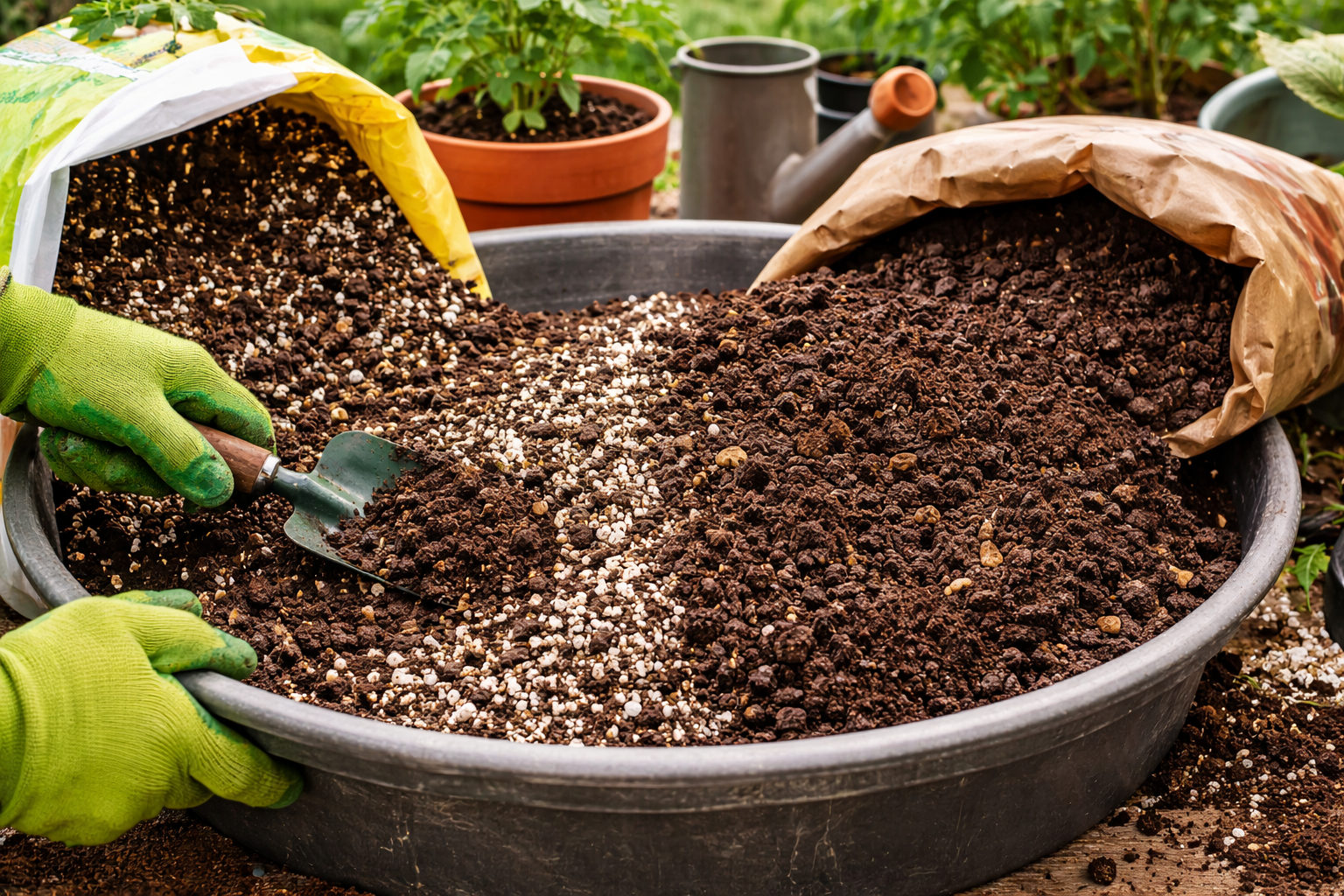
If you want the lowest-risk option, buy a premium container potting mix and use it as your base. Look for a mix that feels fluffy and springy in the bag, not dense and powdery. Good mixes often include ingredients such as peat moss or coco coir for moisture retention, plus perlite or bark fines for aeration and structure.
If you want a practical formula, this is the one I come back to most often for tomatoes in containers:
- 70 to 80 percent quality potting mix
- 20 to 30 percent finished compost
That range is useful because it gives you room to adjust instead of pretending there is one magic ratio for every climate and container. If you garden in intense summer heat or use fabric pots that dry quickly, stay closer to the upper end of that compost range only if your base mix drains well. If you garden in a humid or rainy climate, or your potting mix already feels moisture-retentive, stay closer to the lower end.
What I would not do is make the pot mostly compost. I have tried richer homemade blends that looked great on paper and they almost always aged badly in a pot. Early growth looked lush, then the mix settled, stayed wetter for longer, and started acting heavy around the roots. Tomatoes do not reward that kind of “more is more” thinking in containers.
Use this quick test before filling your pot:
- When dry, the mix should not feel like dust or yard dirt
- When moistened, it should clump lightly in your hand, then break apart easily
- After watering, it should drain freely but still feel evenly moist below the surface
Here’s what nobody tells you:
The best mix usually looks a little boring. It does not scream “ultra rich.” It feels light, structured, and easy to wet evenly. That texture is exactly why it works.
Ingredients that help, ingredients that quietly cause trouble
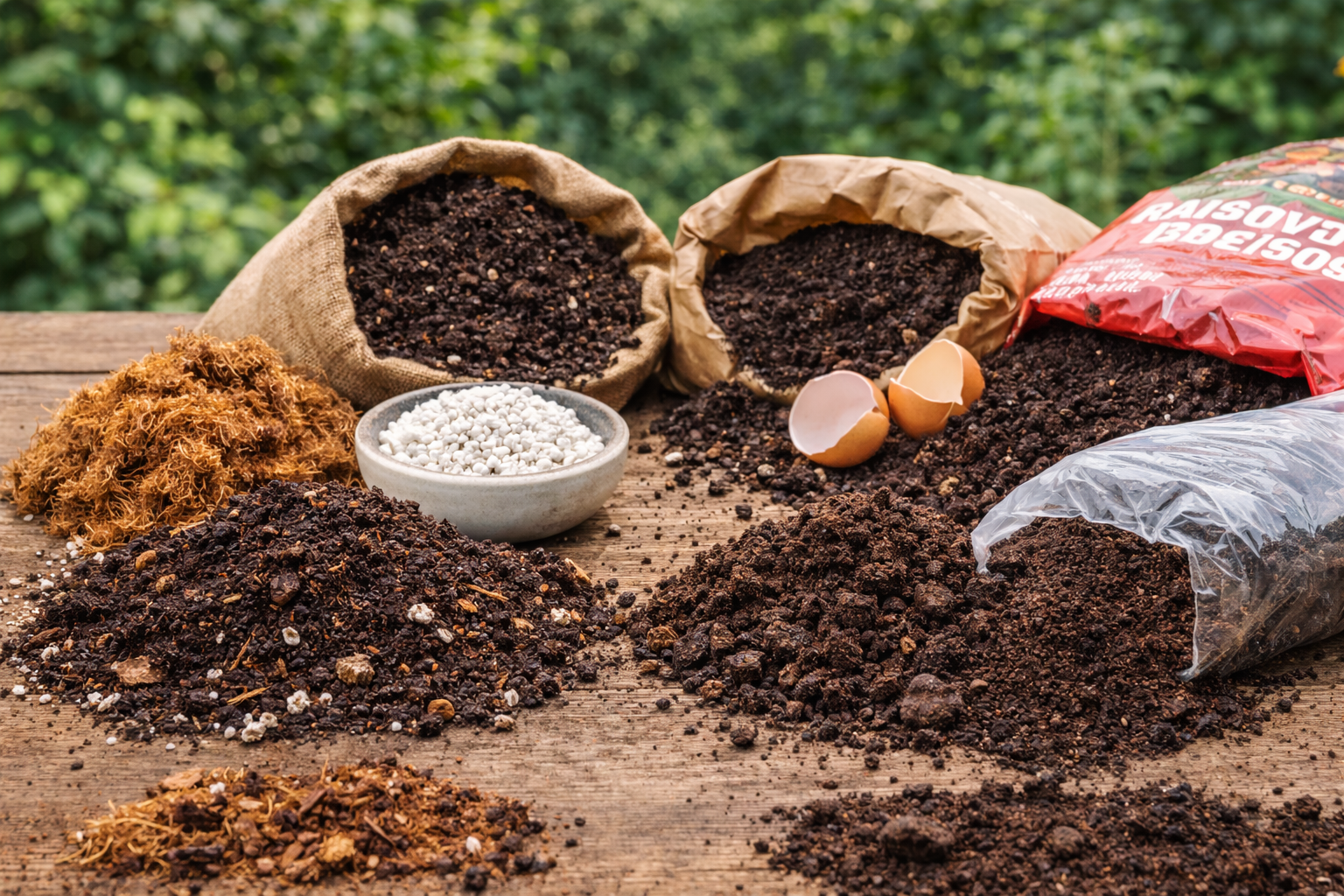
Once you know what the finished mix should do, the ingredient list starts making more sense.
Helpful ingredients
- Peat moss or coco coir: Improve moisture retention and help the mix stay evenly damp instead of drying in patches
- Perlite: Creates air space and helps the mix drain faster
- Bark fines: Add structure and help keep the mix from collapsing over time
- Finished compost: Adds organic matter and some nutrient buffering when used in moderation
Ingredients or setups that often cause trouble
- Garden soil or topsoil: Too dense for containers and prone to compaction
- Straight compost: Usually too heavy and moisture-retentive on its own
- Manure-heavy mixes: Can run too rich and too wet in containers
- Very fine, dark mixes with little visible aeration: Often settle and suffocate roots over time
- Raised bed soil used in pots: Sometimes workable, often too dense unless heavily adjusted
This is one of the biggest label traps in gardening. A bag can say “vegetable,” “raised bed,” or “organic” and still behave poorly in a pot. For tomatoes in containers, texture matters at least as much as the marketing copy. If the mix looks dense and there is little evidence of aeration material, I treat that as a warning sign.
Another common mistake is trying to solve every possible nutrient issue at planting by adding a little of everything into the hole. Eggshells, extra compost, a handful of manure, maybe some garden soil for “real earth” effect. In practice, this usually creates a messy root zone with uneven texture and uneven moisture. Keep the mix simple. Then manage fertility through a steady feeding plan instead of trying to build a one-time miracle layer at the bottom of the pot.
How to adjust the mix for your climate, pot, and tomato type
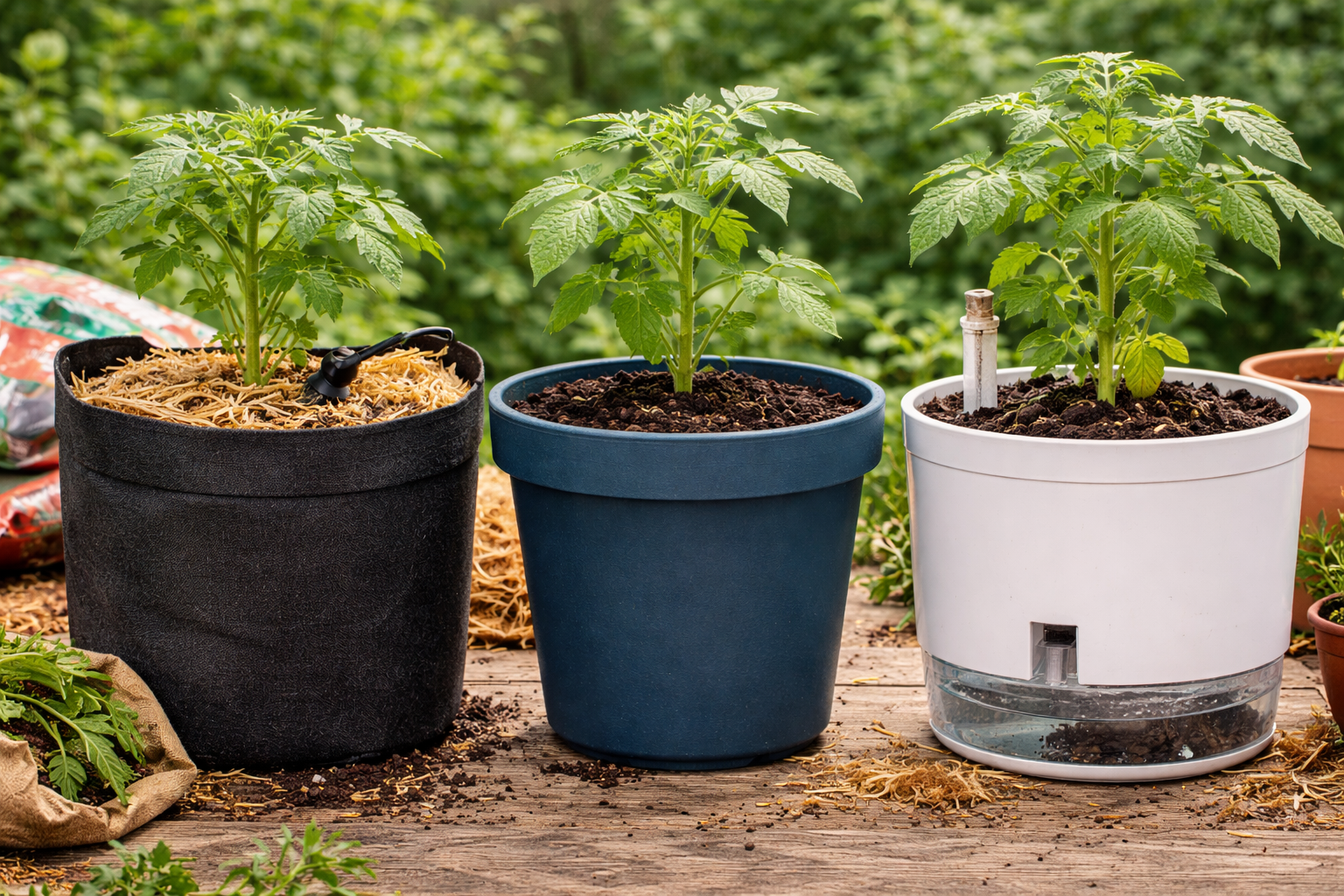
This is where the answer becomes genuinely useful. The best potting soil for tomatoes in containers is not identical in every setup.
Hot, dry climate or full-sun patio
In places where pots heat up fast and afternoon drying is brutal, lean toward a slightly more moisture-retentive mix. That does not mean heavy. It means using a quality base mix, keeping compost moderate, using a larger pot, and mulching the surface to slow evaporation. Fabric pots especially need attention here because they breathe well, which is helpful for roots but rough on moisture retention.
Humid or rainy climate
If your weather already supplies plenty of moisture, you want the opposite bias. Keep the mix open and quick draining. Go lighter on compost if your base mix already holds water well. In wet spells, tomatoes usually suffer more from soggy roots than from mild dryness.
Self-watering planter
These planters already provide more consistent access to water, so avoid turning the medium itself into a swamp. A balanced container mix works better than a heavy homemade blend. Let the planter reservoir provide the consistency rather than relying on a dense soil mix to do that job.
Plastic, ceramic, or fabric containers
Plastic and glazed pots usually hold moisture longer. Fabric pots shed heat well and provide lots of air exchange, but they dry much faster. That means the same potting mix can behave very differently depending on the container material.
Determinate, dwarf, or indeterminate tomatoes
Smaller plants are simply easier to keep evenly watered. Bigger indeterminate tomatoes can thrive in pots, but they demand more from the root zone. As a rule of thumb, smaller determinate tomatoes do well with about 10 gallons, while larger indeterminate types are much happier in 15 to 20 gallons or more. Bigger pots do not just support bigger plants. They also buffer moisture swings, which makes your soil choice far more forgiving.
The Royal Horticultural Society’s guidance on growing tomatoes also stresses the value of generous containers and consistent moisture, which matches what most container gardeners discover after one rough midsummer week. In small pots, even good soil gets pushed past its limits much faster.
Key takeaway:
The best mix is partly a climate decision. If your setup dries too fast, tilt toward moisture retention. If it stays wet too long, tilt toward aeration and faster drainage.
How to test whether your tomato soil is actually good before the plant struggles
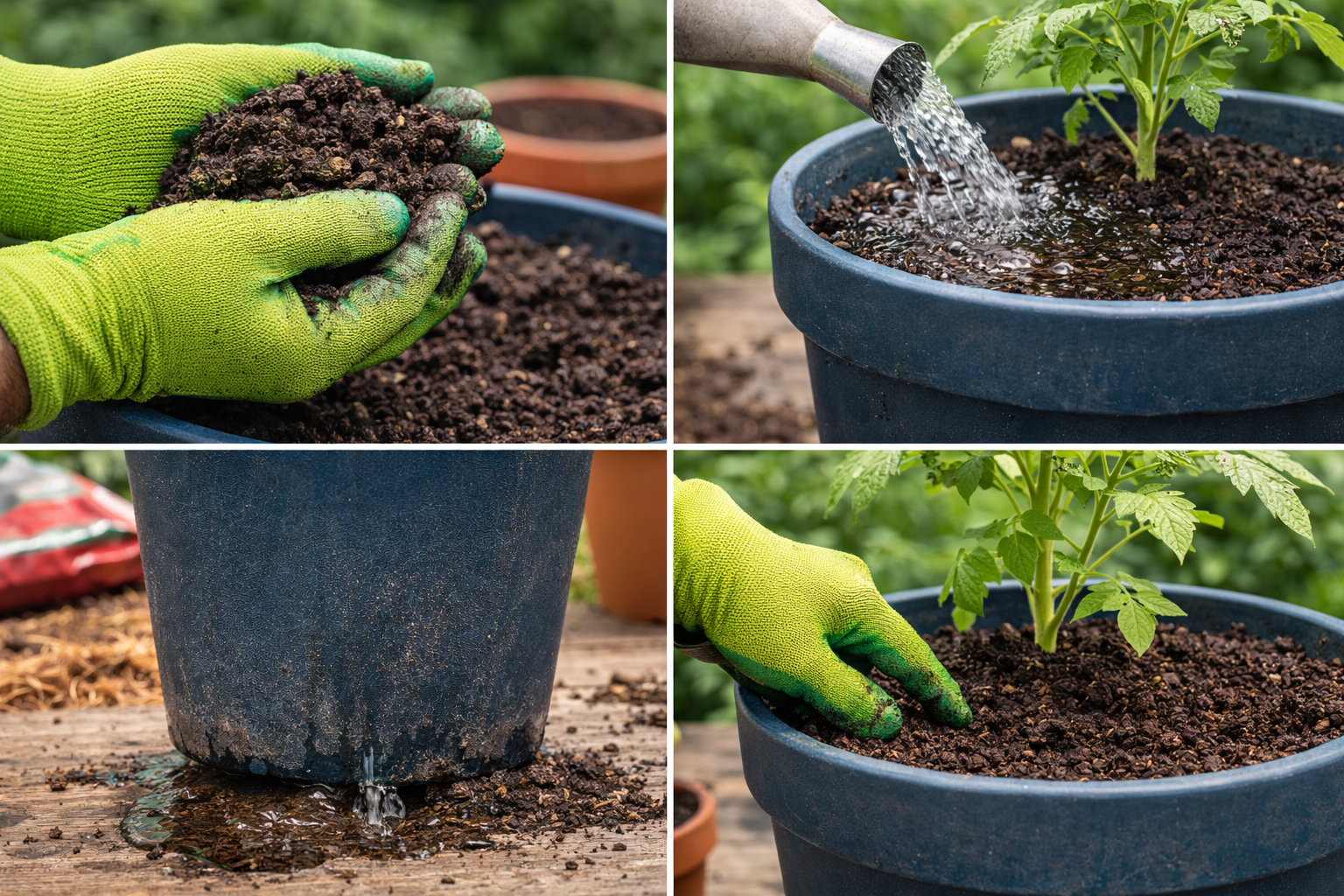
You do not need a lab to tell whether a tomato mix is heading in the right direction. A few simple checks can save you weeks of guessing later.
1. The squeeze test
Moisten a handful of mix and squeeze it gently. It should hold together lightly, then break apart when you poke it. If it forms a slick, dense lump, it is probably too heavy. If it falls apart like dry crumbs and refuses to hold any structure, it may be too coarse or hydrophobic.
2. The soak test
Water the mix thoroughly before planting. The surface should absorb water rather than letting it skate off the top and down the pot edges. Some dry mixes repel water at first, especially if they have dried hard in storage. It is better to find that out before the tomato is in the pot.
3. The drain test
After a full watering, water should run through the container, but the mix should not feel spent or empty afterward. If everything drains in seconds and the pot feels dry almost immediately, you may have gone too far toward aeration without enough moisture retention. If the pot stays heavy and soggy for too long, the mix is too dense.
4. The 24-hour check
Come back the next day and check below the top inch. The surface may be drier, which is normal. What matters is the root zone underneath. It should still feel evenly moist, not soaked and not bone dry.
5. The season test
The real proof comes after a few weeks of watering. Some mixes start well and collapse later. If the soil surface hardens, shrinks away from the container edge, or starts draining unevenly after repeated watering, that is your sign that the structure is degrading.
If you are reusing old potting media or troubleshooting a plant that keeps looking off despite decent care, a simple pH check can be worthwhile. Otherwise, texture and watering behavior tell you far more than most gardeners realize.
Feeding, watering, and mulch: soil alone will not carry the whole season
This is where many otherwise solid articles stop too soon. Even the best container mix will not feed a tomato all season by itself. Tomatoes are hungry, fast-growing plants, and containers are a closed system. Nutrients wash through faster, roots fill the space faster, and the margin for neglect is smaller.
Start with a good mix, then think in systems:
- Add a suitable slow-release fertilizer at planting or begin a steady liquid feeding routine soon after the plant settles in
- Water deeply and consistently rather than on a rigid calendar
- Use mulch to keep the soil surface cooler and reduce evaporation
That middle point matters most. Consistent watering does not mean daily watering no matter what. It means responding to the actual moisture level in the root zone. In hot weather, a fabric pot might need frequent watering. In cooler weather or after rain, the same schedule could leave the mix too wet.
I have found that many tomato problems people call “fertilizer issues” are really moisture issues wearing a disguise. The plant looks stressed, fruit quality slips, and growth stalls, so more feed gets added. But if the roots are alternating between drought and saturation, the plant cannot use nutrients smoothly anyway.
Blossom end rot is a good example. It is often tied to inconsistent moisture and disrupted calcium uptake rather than a simple lack of calcium in the soil. The University of New Hampshire Extension’s tomato fact sheet also notes that excess nitrogen can drive lots of foliage growth at the expense of fruit, which is another reason balanced feeding matters more than dumping in extra amendments at planting.
Key takeaway:
For container tomatoes, “best soil” really means best soil system. The mix, the container size, the watering pattern, and the feeding plan all work together.
Common tomato soil mistakes in pots, and how to fix them fast
The pot stays soggy for too long
This usually means the mix is too dense, the container is too large for the plant size early on, drainage is poor, or watering is too frequent for the weather. Fix it by improving aeration next time, using less compost in the mix, checking drainage holes, and only watering when the root zone actually needs it.
The plant wilts every afternoon
Afternoon wilt can sometimes be normal in intense heat, but if the plant is repeatedly crashing, the pot may be too small, the mix may be drying too quickly, or the container may be cooking in full reflected heat. Move to a larger pot, mulch the surface, and make sure the mix has enough moisture-holding capacity without becoming heavy.
Leaves yellow and growth stalls
This can point to exhausted potting mix, poor drainage, nutrient imbalance, or a root system that has never been comfortable in the container. Look at the soil behavior first. If the mix is compacted and wet, feeding more will not solve the underlying problem.
You get lots of leaves but disappointing fruit
Too much nitrogen is the usual suspect. This often happens when a very rich mix is paired with aggressive feeding. Ease back and let the plant shift its energy toward flowering and fruiting.
You see blossom end rot on the first fruits
Do not panic and start throwing random calcium products into the pot. First ask whether the plant has been kept evenly moist. Inconsistent watering is one of the most common triggers in containers.
The soil surface gets crusty or pulls away from the pot edge
That is a sign the mix is drying too hard and becoming difficult to rewet evenly. Water slowly and thoroughly, then consider top-dressing with mulch and reviewing whether the mix needs better moisture retention next time.
Common mistake:
Trying to fix every symptom with fertilizer. Many container tomato problems begin with poor soil structure or uneven watering, not a lack of nutrients on paper.
Can you reuse potting soil for tomatoes next year?
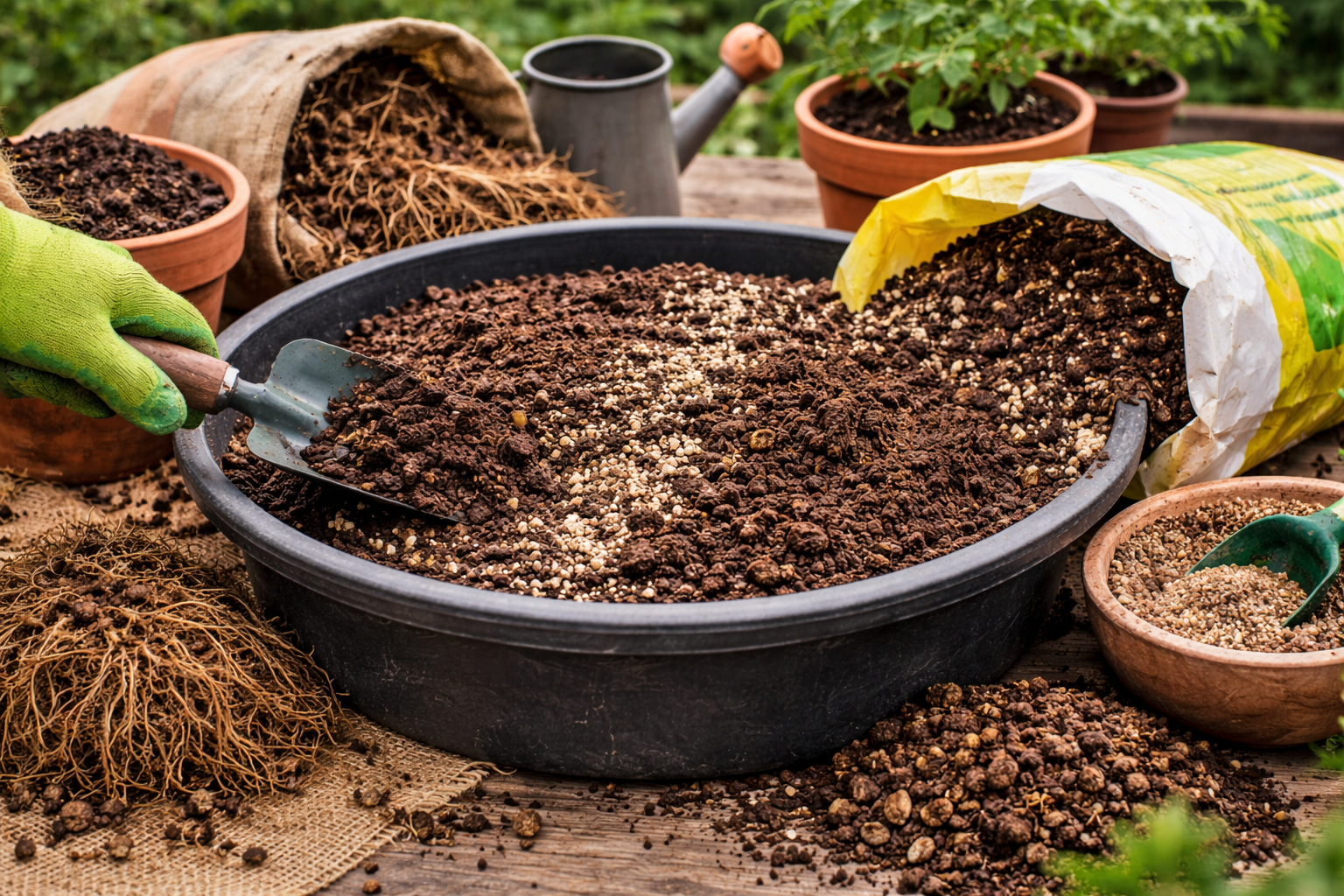
Sometimes, yes. Sometimes, absolutely not.
You can often reuse potting mix if the previous plants were healthy, the texture still looks good, drainage still works, and there was no major disease issue. You should be much more cautious if the old tomato crop had obvious disease, severe pest pressure, or a full season of root stress in a mix that compacted badly.
When I reuse potting mix, I never treat it like a fresh bag. I treat it like an ingredient. I remove old roots and debris, break up any compacted sections, and blend it with fresh potting mix rather than filling a container with the old material straight from storage. Then I recharge fertility and check the texture again with the same squeeze and drain tests I would use on a new mix.
A practical refresh method looks like this:
- Remove roots, weeds, and old mulch
- Discard any mix that smells sour, stays clumpy, or feels muddy when wet
- Blend the reusable portion with fresh container mix
- Add a modest amount of compost if the structure still feels open
- Recharge with fertilizer before planting
If the old mix has collapsed into something dense and lifeless, let it go into the garden or compost system instead of forcing another tomato season out of it. Reusing media is only smart when the structure still works. Saving a few pounds of mix is not worth setting up the next plant for a long, frustrating struggle.
What to do if you want the simplest no-regret setup
If you want the shortest path to healthy potted tomatoes, do this:
- Choose a large container with real drainage
- Use a quality potting mix made for containers
- Add only a moderate amount of compost, not a heavy percentage
- Mulch the surface after planting
- Feed consistently through the season
- Water based on the root zone, not on habit
That simple setup outperforms a surprising number of overcomplicated homemade recipes. Tomatoes in pots do not need magic. They need a root zone that stays balanced.
If you remember nothing else, remember this: container tomatoes fail most often when the mix is too dense, too small a pot magnifies every mistake, or watering swings become extreme. Get those three things under control and the rest gets much easier.
The direct answer most readers need is still the right one: use a light, airy, well-draining container potting mix with some organic matter and a steady feeding plan. The useful part is knowing how to tune that answer to your own heat, container, and watering reality.
FAQ
Is potting soil or potting mix better for tomatoes in pots?
A container potting mix is usually the better choice. Labels vary, but for tomatoes in pots you want a product designed to stay lighter and more aerated than garden soil or topsoil.
Can I use garden soil in tomato containers if I mix in compost?
It is still risky. Garden soil often compacts in containers and drains poorly. Compost does not reliably fix that problem and can sometimes make the texture even heavier.
Do fabric pots need a different tomato soil mix?
Not completely different, but they often benefit from a mix that leans slightly more toward moisture retention because fabric containers dry faster than plastic or glazed pots.

Michael Rowan is the founder and lead writer at The Garden Playbook. He has spent 10+ years growing plants across a range of settings — from indoor houseplants and container gardens to raised beds and in-ground plots — adapting methods to different light levels, seasons, and growing conditions.
Michael focuses on practical, experience-based guidance grounded in fundamentals: soil health, watering strategy, plant nutrition, pruning and propagation, and integrated pest management (IPM). His work aims to help readers diagnose common problems (such as yellowing leaves, stunted growth, or pest pressure) and apply straightforward solutions that are realistic for home gardeners.
At The Garden Playbook, Michael develops tutorials and plant guides using a consistent process: documenting real outcomes where possible, explaining the “why” behind each step, and verifying higher-risk topics (such as plant toxicity or pest treatment options) against reputable horticultural references.