I still remember standing in my kitchen with a cutting board full of vegetables, trying to build a healthier dinner, when I caught myself doing the same thing a lot of readers do: staring at a bell pepper and wondering whether it belonged in the “smart choice” pile or the “better skip it” pile. That question gets even more stressful when you are comparing foods for potassium, heart health, or a kidney-friendly diet. Most articles give you a number, toss in the phrase “low potassium,” and move on. Technically correct, maybe. Actually useful, not always.
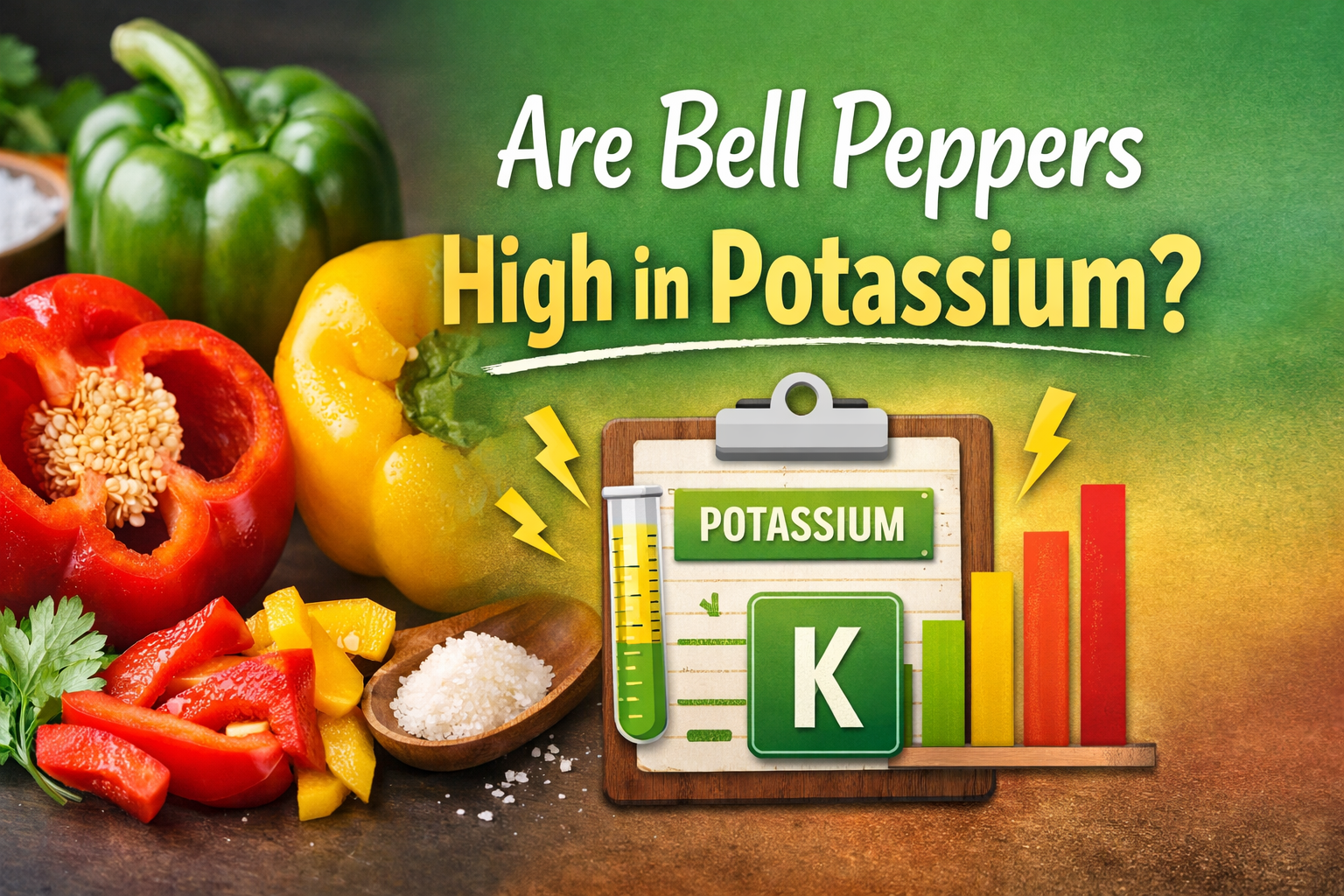
Here is the plain answer: are bell peppers high in potassium? In most everyday nutrition contexts, no. Bell peppers contain potassium, but they are not usually considered a high-potassium food, especially compared with foods like potatoes, bananas, tomato products, and many beans.
What makes this confusing is context. A few strips in a salad is one thing. Two stuffed peppers in a large dinner is another. If you have been told to watch potassium closely, the question is not just “Does this food contain potassium?” It is “How much am I actually eating, and what else is on the plate?”
- What “high in potassium” really means in real-life food choices
- How much potassium is in a medium bell pepper, half cup, and full cup
- Whether red, green, and yellow bell peppers differ enough to matter
- When they fit easily into a low-potassium eating pattern
- When portion size turns a reasonable choice into a sneaky potassium-heavy meal
- How to make a fast decision without memorizing nutrition charts
Key takeaway
Bell peppers are usually a lower-potassium vegetable, not a potassium heavyweight. For most people, they are an easy yes. For people on a strict potassium limit, portion size and the rest of the meal matter more than the pepper alone.
Are bell peppers high in potassium? The useful answer up front
If you are generally healthy and just trying to eat better, bell peppers are not a food you need to worry about for potassium. They are better thought of as a moderate-to-lower potassium vegetable that is easy to fit into meals.
If you are following a kidney diet or have been told to limit potassium, they can still fit for many people, but this is where the generic answer stops being enough. You need serving-size context. That is the part most readers are really looking for.
In practice, I think of bell peppers like a carry-on bag. The bag itself is not the problem. What matters is how much you pack into it. A few slices with hummus, a chopped half cup in an omelet, or some strips in a salad is very different from a meal built around large stuffed peppers plus tomato sauce and beans.
So the fast rule is simple:
- If you are eating a modest portion, bell peppers are usually a lower-potassium choice.
- If you are eating a large pepper-heavy meal, the potassium adds up.
- If you have chronic kidney disease, hyperkalemia, or a clinician-given potassium target, use that target instead of relying on a generic “safe” label.
How much potassium is in bell peppers, really?
Here is where the internet often gets messy. You will see different potassium numbers because sources use different serving sizes, different pepper colors, and sometimes different databases. That does not mean the numbers are wrong. It means they are answering slightly different questions.
According to the FDA’s raw vegetable nutrition data, one medium bell pepper has about 220 mg of potassium. That is a practical number because “one medium pepper” is how people actually shop and cook.
Other reliable food-source references place 1 cup of raw red bell pepper at about 314 mg of potassium. Kidney-focused food lists often use a 1/2-cup serving and classify peppers as a lower-potassium vegetable in that portion size.
That gives you a useful working range:
- About 88 to 159 mg per 1/2 cup, depending on the type of reference and pepper color
- About 220 mg for 1 medium bell pepper
- About 260 to 314 mg per cup, depending on color and source
This is why quoting a single number can mislead people. A chopped half cup in a salad and a large roasted pepper side dish are not nutritionally identical, even though both involve “bell peppers.”
Common mistake
Treating one potassium figure as universal. Potassium values shift with serving size, color, and whether you are looking at a whole pepper or a measured cup.
So what counts as “high” potassium in real life?
Most readers do not need a chemistry lesson. They need a decision rule. Here is the one that actually helps.
For everyday healthy eating, bell peppers are not high in potassium. They sit well below foods that usually trigger potassium concern, such as potatoes, sweet potatoes, tomato paste, many beans, dried fruit, and bananas.
For stricter tracking, bell peppers are better viewed as “manageable.” Not zero. Not sky-high. Manageable.
A simple way to think about it:
- A small serving of bell pepper is usually a low-drama choice.
- A medium serving is still reasonable for many people.
- A large serving becomes more important when it is paired with other potassium-rich foods.
If you want a quick mental shortcut, ask yourself this: is the bell pepper acting like a garnish, a side, or the backbone of the meal? Garnish is easy. Side is usually fine. Backbone means you should zoom out and count the rest of the plate too.
Red vs green vs yellow bell peppers: does the color matter?
Yes, but not in the dramatic way many people assume.
Red bell peppers are fully ripened, which is why they tend to be sweeter and richer in certain nutrients. Green peppers are less ripe and slightly more bitter. Yellow and orange land somewhere in between. That shift in ripeness can nudge nutrient values, including potassium, but the bigger story is still portion size.
In practical terms, red peppers may run a bit higher in potassium per cup than green peppers. But for most readers, that difference is not large enough to turn one color into a “good” food and another into a “bad” one.
I have tracked meals where a switch from green to red looked significant on paper, but once the whole dinner was counted, it barely changed the outcome. The sauce, starch, beans, or protein side usually moved the needle more.
That is why choosing bell pepper color based on flavor, recipe fit, and what helps you eat more vegetables consistently is usually smarter than obsessing over a small potassium difference.
Key takeaway
Color changes the nutrition profile a little. It does not usually change the verdict. For most people, red, green, and yellow bell peppers can all fit.
How bell peppers compare with other foods people worry about
This is where the question finally becomes easy. Bell peppers only sound confusing when you look at them in isolation. Compare them with common higher-potassium foods and their place becomes much clearer.
Bell peppers usually come in lower than:
- Bananas
- Potatoes and sweet potatoes
- Tomato sauce and tomato paste
- Many beans and lentils
- Dried fruit
- Some leafy greens in larger cooked portions
That matters because people often worry about the wrong ingredient. I have seen meal logs where someone fixates on the sliced peppers in a wrap while ignoring the pile of tomato-rich soup, beans, and baked potato on the same day. The peppers were not the real issue.
Here is the more useful comparison mindset:
- If you need a crunchy vegetable for sandwiches, salads, fajitas, or snack plates, bell peppers are often a better potassium trade than tomato-heavy add-ons or potato-based sides.
- If you are choosing between peppers and a clearly high-potassium staple, peppers are usually the lighter option.
- If the meal already includes several moderate-to-high potassium foods, peppers can still fit, but they stop being invisible.
When bell peppers can still become a potassium problem
This is the part almost nobody explains clearly enough.
Bell peppers themselves are not usually the issue. Bell pepper-heavy meals can be.
Watch for these situations:
- Large stuffed peppers, especially if the filling includes beans, tomato sauce, or other higher-potassium ingredients
- Big fajita platters with several cups of peppers plus beans, rice, salsa, and avocado
- Meal-prep bowls where peppers are combined with potatoes, leafy greens, and legumes
- Roasted vegetable trays where a “serving” ends up being much larger than expected
- Snacking on a bag of mini peppers while also eating a potassium-heavy meal
The problem is cumulative load. Think of it like rain in a bucket. A little on its own is not a big deal. Several moderate pours at once can overflow the whole thing.
If you are on a potassium restriction, use this quick check before eating:
- How big is the pepper portion?
- What else on the plate brings potassium?
- Am I eating this as a garnish, a side, or the center of the meal?
- Has my clinician given me a specific daily or per-meal limit?
Here’s what nobody tells you
The pepper is often not the potassium problem. The whole meal is. A moderate food becomes a concern when several moderate foods pile up together.
Are bell peppers good for a low-potassium or kidney-friendly diet?
For many people, yes. Bell peppers are commonly included on lower-potassium vegetable lists used in kidney nutrition resources. The National Kidney Foundation’s low-potassium fruits and vegetables guidance includes peppers in a 1/2-cup serving, which helps explain why they are often recommended in kidney-friendly meal planning.
But this is where responsible advice matters. “Kidney-friendly” is not a free pass. Potassium needs can vary a lot depending on lab values, medications, kidney function, and whether a person has been told to actively restrict potassium.
If that is you, the safest rule is this:
- If your care team has not told you to restrict potassium, they are usually an easy vegetable to include.
- If you do have a potassium restriction, use smaller servings and pay attention to the total meal, not just the pepper.
- If your blood potassium runs high, your personalized plan matters more than any generic online list.
I like them in lower-potassium meal planning because they solve a practical problem: they bring crunch, sweetness, color, and flavor without pushing the meal into obviously high-potassium territory the way tomato-heavy sauces or potato sides often can.
That does not mean unlimited. It means useful.
Raw, roasted, stuffed, or cooked: preparation changes the question
Preparation does not magically turn them into a high-potassium food, but it absolutely changes how much you are likely to eat.
Raw peppers take up more visual space. A cup of chopped raw pepper looks like a lot. Roasted peppers shrink. Stuffed peppers become the main event. That is why the same food can feel very different in real meals.
Here is how I think about it:
- Raw slices in salads, snack plates, and sandwiches are usually small and easy to fit.
- Cooked peppers in stir-fries and fajitas are still reasonable, but portions can climb fast.
- Stuffed peppers should be evaluated as a whole dish, not as “just a vegetable.”
- Jarred or canned peppers may not be a potassium issue, but sodium can matter depending on your needs.
This is one reason meal photos and tracking can be eye-opening. When I have tested portions in my own kitchen, the cooked pepper dishes that seemed harmless were often double what I would have guessed by sight alone.
If you need a simple rule, use this one: the more a pepper-based dish looks like a full entrée instead of a vegetable add-on, the more you should count the whole plate carefully.
What bell peppers give you besides potassium
Focusing only on potassium can make you miss why they are such a strong food choice for many people in the first place.
They are low in calories, easy to use, and rich in helpful nutrients. The NIH Office of Dietary Supplements explains why potassium matters for normal kidney, heart, muscle, and nerve function, but foods are never just one nutrient. Bell peppers also bring vitamin C, fiber, and antioxidant compounds, especially in red varieties.
That matters in real life because the best vegetable is often the one you will actually eat often enough to matter. They work in omelets, sheet-pan dinners, salads, wraps, stir-fries, snack trays, grain bowls, and pasta dishes. They add sweetness and crunch without much effort.
In other words, they do not just “fit the numbers.” They make healthy meals easier to repeat. That is a bigger win than people realize.
Why this works
Foods that are versatile, flavorful, and easy to use tend to show up more often in real meals. Bell peppers help many people eat more vegetables consistently, which is usually more valuable than chasing a perfect nutrition label.
The fast decision guide: should you eat bell peppers or not?
If you want the whole article boiled down to one practical answer, here it is.
- If you are generally healthy and asking whether bell peppers are high in potassium, the answer is no for normal everyday eating.
- If you are loosely watching potassium, they are usually a solid choice, especially in modest portions.
- If you are on a strict low-potassium diet, they may still fit, but count the serving and check the rest of the meal.
- If the dish includes beans, tomato products, potatoes, avocado, or multiple high-potassium ingredients, evaluate the whole plate, not just the peppers.
- If you have chronic kidney disease, hyperkalemia, or clinician-specific nutrition instructions, follow those first.
The mistake to avoid is treating “contains potassium” like “high in potassium.” Almost all whole foods contain some potassium. The better question is whether the amount is significant in the portion you actually eat.
For bell peppers, the answer is usually reassuring. They are more often the helpful crunchy vegetable than the hidden nutrition trap.
FAQ
Are mini bell peppers high in potassium?
Not usually. They still contain potassium, but mini bell peppers are generally eaten in smaller portions, which makes them easier to fit into most eating patterns. The catch is that they are easy to snack on mindlessly, so portion creep can happen faster than people expect.
Are cooked bell peppers higher in potassium than raw bell peppers?
Cooking changes water content and portion density more than it changes the basic story. Cooked peppers can seem “higher” because a smaller-looking cooked portion may contain more pepper than you realize. That is why cooked servings are easier to underestimate.
How many bell peppers can you eat if you need to watch potassium?
There is no one-size-fits-all number. It depends on your daily potassium target, your lab values, and what else you are eating. For strict potassium restriction, this is where your dietitian or clinician’s guidance matters most. In general, smaller servings are easier to fit than meals built around multiple whole peppers.

Michael Rowan is the founder and lead writer at The Garden Playbook. He has spent 10+ years growing plants across a range of settings — from indoor houseplants and container gardens to raised beds and in-ground plots — adapting methods to different light levels, seasons, and growing conditions.
Michael focuses on practical, experience-based guidance grounded in fundamentals: soil health, watering strategy, plant nutrition, pruning and propagation, and integrated pest management (IPM). His work aims to help readers diagnose common problems (such as yellowing leaves, stunted growth, or pest pressure) and apply straightforward solutions that are realistic for home gardeners.
At The Garden Playbook, Michael develops tutorials and plant guides using a consistent process: documenting real outcomes where possible, explaining the “why” behind each step, and verifying higher-risk topics (such as plant toxicity or pest treatment options) against reputable horticultural references.