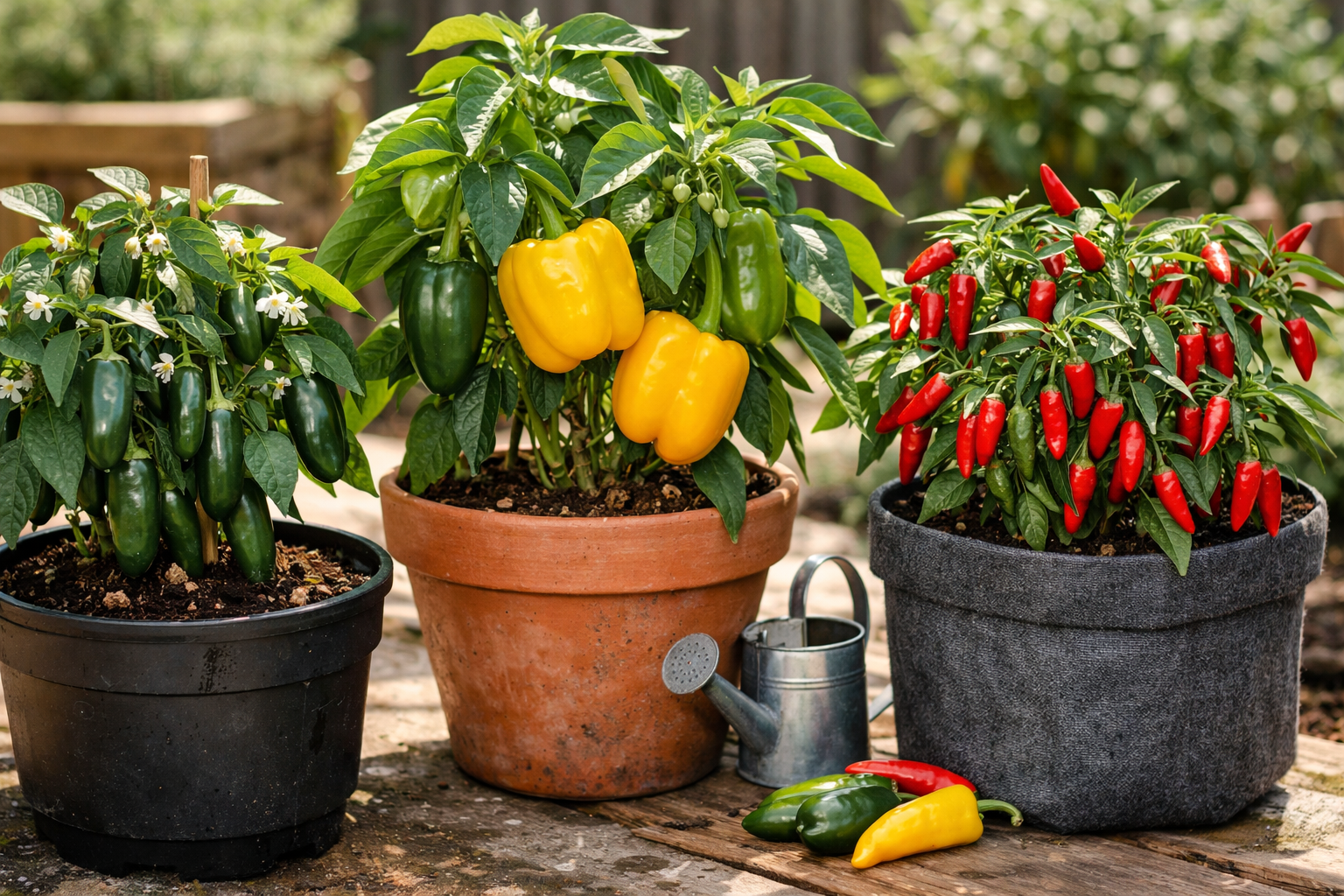
You can grow a happy pepper plant in a pot and still get a pretty underwhelming harvest. I learned that the irritating way with a glossy bell pepper transplant in a bucket that looked roomy in May and turned stingy by August.
For most gardeners, the best peppers to grow in containers are compact, earlier, smaller-fruited types: jalapeno, shishito or padron, Thai-type peppers, cayenne, and smaller sweet peppers such as banana or patio types. That broad answer works because container growing rewards peppers that fruit before the season turns, stay manageable above the soil line, and do not need a huge root run to size up thick, heavy fruit.
University of Maryland Extension puts peppers in full sun with at least 6 hours a day, says they prefer 8 to 10 hours, and gives containers a 5-gallon minimum. RHS adds a second piece that matters just as much: sweet peppers grow better above 15C and fruiting can slip once temperatures push past 30C. Put those together and you get the real rule. A pepper that is “good in a pot” on a sunny, warm patio is not always a good bet on a breezy balcony with a short season.
Here’s what you’ll get from this guide:
- Which peppers give the best payoff in pots
- How to match a pepper to the container you actually have
- When sweet peppers are worth the trouble and when they aren’t
- What causes flower drop, slow ripening, and leaf-heavy plants
- Simple rules that make patio peppers far less fussy
Fast pick grid
| If this sounds like you | Start with | Skip for now |
|---|---|---|
| Small balcony, one modest pot | Jalapeno, shishito, Thai-type, compact cayenne | Full-size bells and big poblanos |
| You want sweet peppers with less drama | Banana or compact patio sweet peppers | Huge blocky bells in small pots |
| You cook spicy food a lot | Thai-type, jalapeno, cayenne | Mild ornamental types if flavor is the goal |
| You want the easiest first win | Shishito or jalapeno in a 5-gallon pot | A thirsty sweet bell in a cramped container |
The short answer: the best peppers to grow in containers for most gardeners
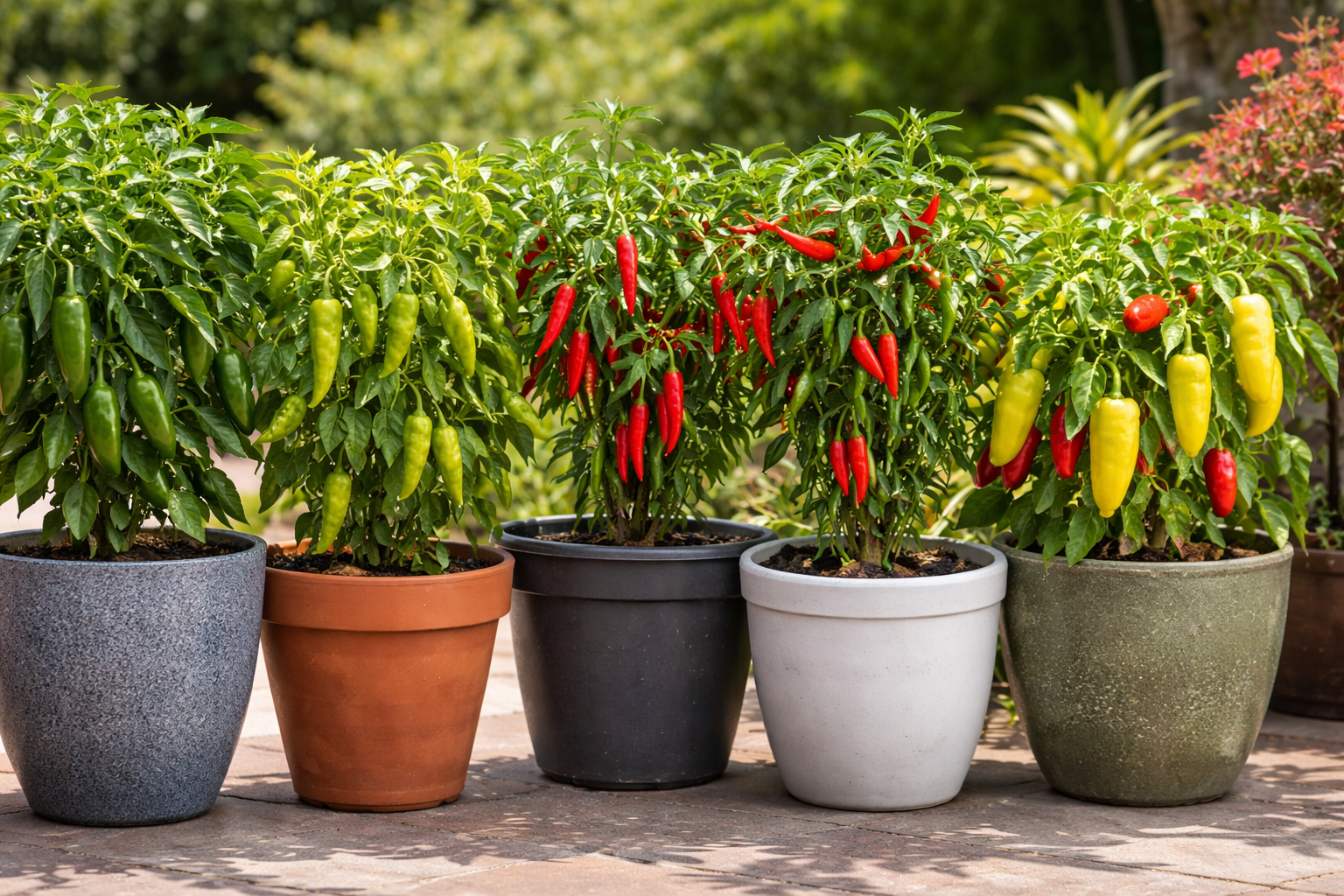
If you want the least risky shortlist, start here: jalapeno, shishito or padron, cayenne, Thai-type peppers, and compact sweet peppers such as banana or patio varieties.
Those types keep showing up as good container plants for a reason. Maryland Extension groups jalapeno, cayenne, banana, bell, and poblano among the pepper types that grow well in home gardens, and All-America Selections highlights compact winners bred or trialed for strong garden performance such as Pot-a-peno, a compact jalapeno that reaches green harvest in 45 to 50 days from transplant and red harvest in 60 to 65 days. Faster fruiting and a tighter plant habit are gold in a container.
Here is the blunt version. A pepper that makes smaller fruits usually forgives a smaller root zone. A pepper that wants to make big thick-walled fruits asks more from the pot, the weather, and your watering habits. That is why a shishito in a 5-gallon pot often feels generous while a bell in the same setup can feel a bit stingy.
Remember: “Can grow in a container” and “is a smart container choice” are not the same thing. If the pot is small, the season is short, or the patio gets hammered by heat, compact and earlier peppers usually win.
A workable size guide helps. A very compact patio pepper can live happily in 2 to 3 gallons. A 5-gallon container is the safe default for most peppers. A 7- to 10-gallon pot is where full-size bells and larger poblanos start to feel less cramped and less moody. Maryland Extension’s 5-gallon minimum is a good default rule, not a law of physics.
Use the 4-filter test to choose the right pepper for your container
Most people pick a pepper by heat level. That is understandable and it is also how people end up annoyed.
A better filter goes in this order: root room, season length, kitchen use, and how much fuss you can tolerate.
Filter 1. Match the plant to the pot. If the container is under 5 gallons, lean toward compact jalapenos, Thai-type peppers, shishitos, and other smaller-fruited plants. If you have 7 to 10 gallons and steady sun, bigger sweets become more realistic. That one call changes the whole season.
Filter 2. Match the plant to the weather. Maryland Extension notes peppers want warm soil and says planting before soil reaches 65F can leave plants just sitting there. RHS says sweet peppers can cope with 12C nights but grow better above 15C, and fruiting drops once temperatures climb over 30C. So if the season is short or the site runs cool, go earlier and smaller. If the patio is a heat trap, choose varieties that fruit well on compact plants and watch watering like a hawk.
Filter 3. Match the pepper to the pan. Want fast stir-fry peppers? Shishito or padron. Want salsa, poppers, and pickling? Jalapeno. Want drying or flakes? Cayenne. Want hot sauce or big flavor in tiny fruit? Thai-type peppers. Want stuffing? That pushes you toward bigger sweets, which means bigger pots too.
Filter 4. Match the pepper to your tolerance for maintenance. If you know you miss a day of watering now and then, don’t pick the pepper that needs the biggest, thirstiest fruit load in the smallest root space. Bigger pots buy forgiveness. Smaller fruits buy forgiveness too.
Fast decision rule
- If the pot is small, choose smaller-fruited peppers.
- If the season is short, choose earlier peppers.
- If the site is brutally hot, use more soil volume and stay on top of moisture.
- If you want sweet peppers first, choose compact sweets before big bells.
Choose easy, high-reward peppers if you want reliable harvests
Jalapeno is the workhorse. It makes sense for beginners because it is useful at green stage, useful again at red stage, and sturdy enough that one plant in a 5-gallon pot can feel worth the space. Pot-a-peno is a nice example of what a container-friendly jalapeno looks like: compact habit, full sun, and green harvest in 45 to 50 days from transplant. When a pepper gets to usable harvest that quickly, the pot feels productive instead of decorative.
Shishito and padron are low-drama and generous. They don’t ask the plant to build thick walls or giant fruit. You harvest early and often, which fits container growing beautifully. In my own pots, these are the peppers that make people think they’re suddenly good at peppers.
Cayenne and Thai-type peppers punch above their size. Small fruits, steady output, lots of kitchen uses. Dry them, pickle them, throw them into hot oil, whatever. They also tend to look busy on the plant, which sounds cosmetic but matters. A container pepper that visibly loads up with fruit keeps you from second-guessing the whole setup.
One “sure thing” plus one experiment is a smart rhythm. I like one dependable pepper such as jalapeno or shishito, then one oddball or hotter pepper beside it. That gives you dinner peppers and a bit of fun without betting the whole season on a fussy plant.
Pro tip: If this is the first year growing peppers in pots, pick a pepper you can harvest green. That shaves off waiting time and rescues short seasons.
Grow sweet peppers in containers only when the setup supports them
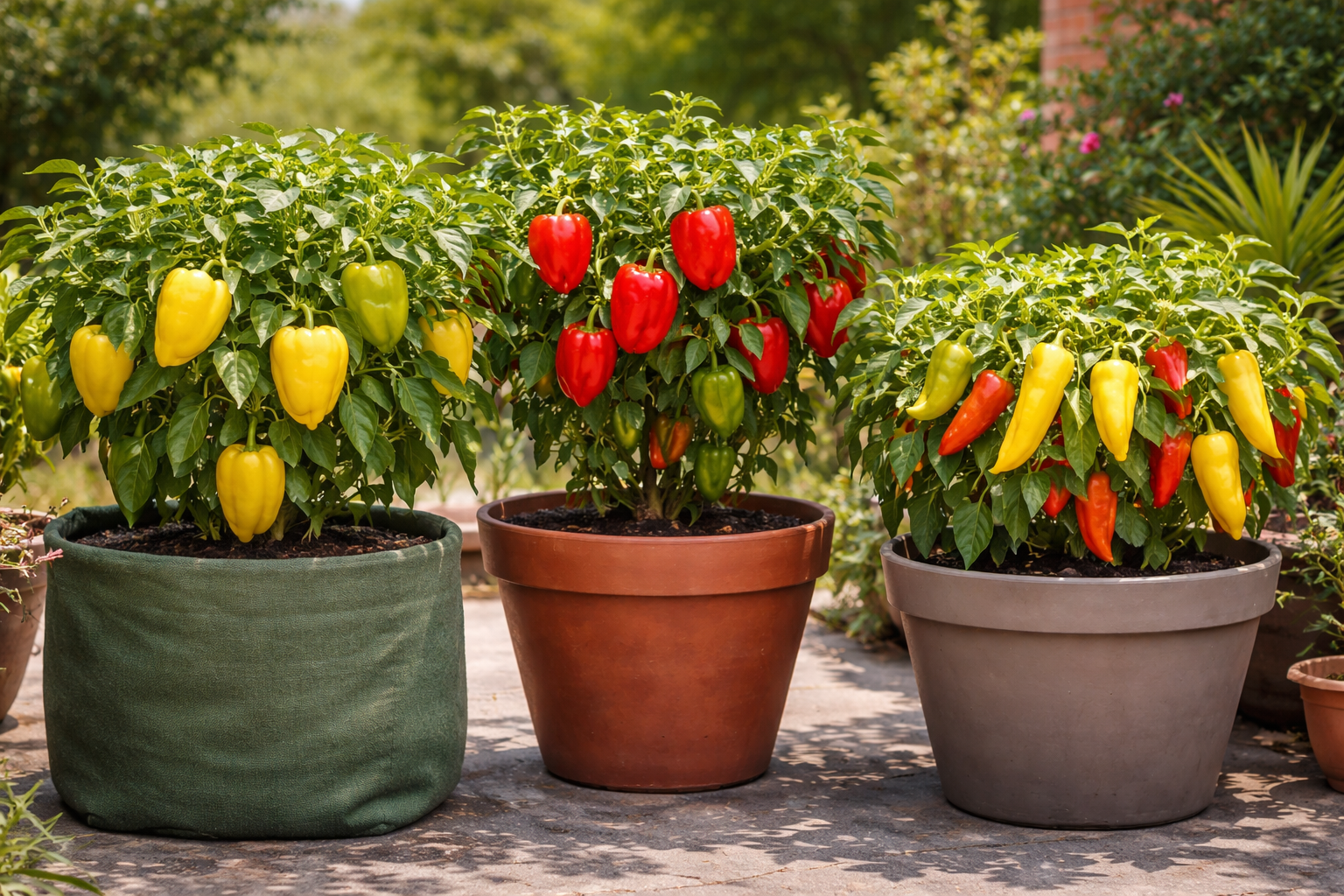
Sweet peppers can absolutely grow in containers. They just aren’t always the smartest first pick.
Maryland Extension lists bell peppers at 70 to 80 days to mature green, then another 2 to 3 weeks to fully ripen. That timeline is manageable in a warm spot with enough soil volume. It gets a lot less friendly in a cramped pot or a cooler season. Thick walls and bigger fruit are lovely on the plate and rougher on the root zone.
If the goal is “sweet pepper flavor with the least drama,” go smaller. Banana peppers, frying peppers, and compact patio sweets usually make more sense than trying to force a supermarket-style bell out of a small container. All-America Selections describes Sweet Sunset as a compact banana pepper that sets a large amount of fruit and can be grown in a container, with harvest around 85 to 90 days from transplant. That is still not fast-fast, but it is a more pot-friendly sweet pepper lane.
Here is the honest tradeoff. If you have one container and you want maximum odds of a satisfying harvest, a jalapeno or shishito is usually the safer bet. If you have a roomy pot, strong sun, and real patience, sweet peppers become much more worth it.
A few setups where sweet peppers do make sense:
- A 7- to 10-gallon pot with steady sun and regular watering
- A sheltered patio that holds warmth well
- A gardener who actually wants sweet peppers for cooking, not just “a pepper plant”
And if the container is oversized, fill it sensibly. How to fill a large plant container is worth a quick read because wasted depth, blocked drainage, and too little real potting mix can turn a big pot into a fake advantage.
Pick hot or ornamental peppers for tiny spaces, strong flavor, or visual punch
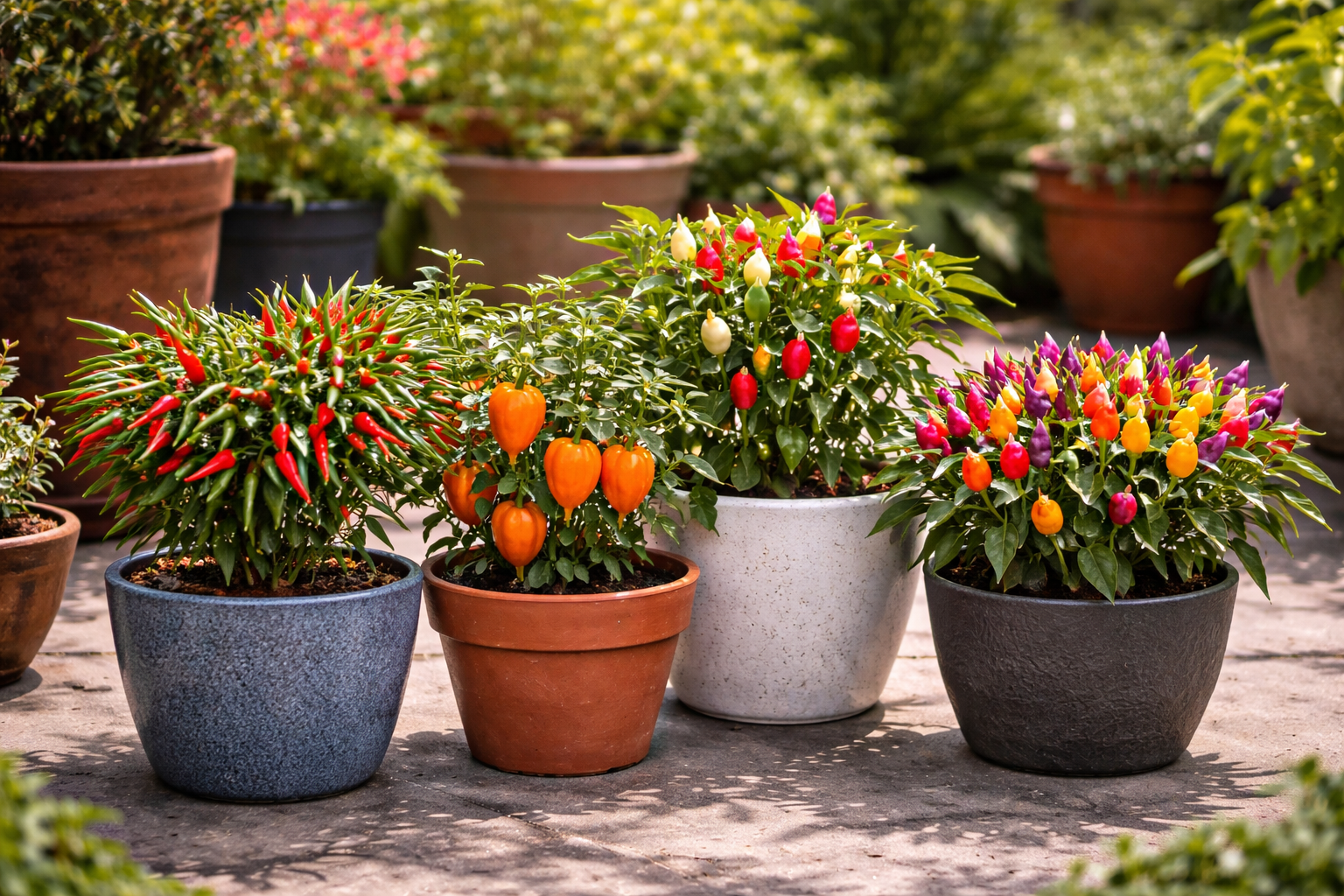
When space gets tight, hot peppers start to look very clever.
All-America Selections’ Quickfire is a good picture of why. It is listed as compact, container-suitable, no staking required, and around 40,000 Scoville heat units with harvest about 50 days from transplant. That is exactly the kind of profile that flatters a container: small plant, quick payoff, plenty of heat, and no heavy fruit load snapping stems.
Hot peppers also earn their keep in the kitchen. One small Thai-type plant can feed a lot of stir-fries, sauces, and freezer bags. You are not waiting on a few oversized fruits. You are harvesting a steady stream of smaller ones.
Ornamental peppers are a different choice. They can be fun, bright, and compact. Some are edible. Flavor is not always why people grow them. So if the main goal is cooking, buy for eating quality first and looks second.
University of Minnesota Extension notes that containers can need water more than once a day in hot, dry weather. That matters with hot peppers on hardscaped patios because small containers heat up fast and dry down fast. Strong flavor does not cancel out root stress.
Note: Very hot peppers are fine in pots. Just use gloves when slicing or processing them and don’t rub your eyes like a fool five minutes later.
Choose the container setup that makes peppers easier, not harder
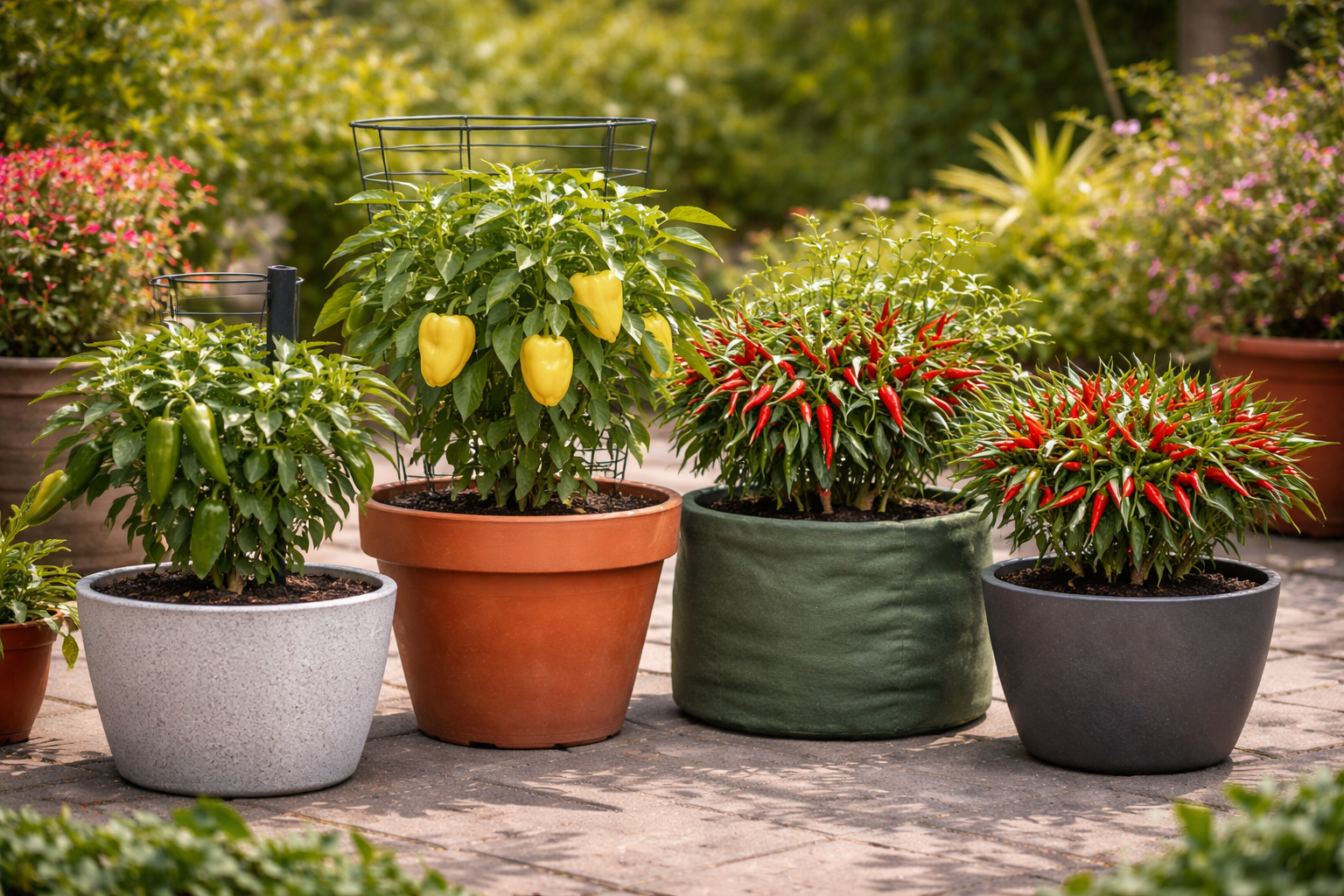
The easy default is one pepper plant per pot. People crowd seedlings because the pot looks huge in spring. By July, the roots have other opinions.
Maryland Extension gives a 5-gallon minimum for peppers. RHS says to plant one sweet pepper in a container at least 30cm wide. Those are not competing ideas. They are pointing at the same truth from different angles: peppers like real root space and stable moisture.
Here is a practical pot guide:
- 2 to 3 gallons: true patio peppers and very compact hot types
- 5 gallons: safest all-around size for jalapeno, shishito, cayenne, and many standard peppers
- 7 to 10 gallons: better for bells, poblanos, and any pepper you expect to carry bigger fruit
Material matters too. Black plastic heats up fast. Terracotta breathes and dries faster. Fabric pots can work well, but they dry quickly in heat and wind. Resin or plastic planters with enough soil volume are boring in the best way. They buffer moisture swings better than tiny decorative pots.
Drainage beats style. A pepper in a pretty pot without drainage is just waiting to sulk.
Use a loose potting mix, not dense garden soil. Add a stake or small cage early for taller peppers or heavier fruit set. RHS notes support can be needed because fruiting stems can snap, and that gets more likely once bigger peppers start hanging.
If a mixed pot is tempting, keep it limited. What to plant with basil in a container is one of the few genuinely relevant crossovers here because basil and peppers can share a large warm planter. Small pots are another story. Crowding sneaks up on you.
Keep container peppers productive with better sun, watering, feeding, and harvest timing
Give them more sun than you think. Maryland Extension’s guidance is clear: full sun means at least 6 hours of direct light and peppers prefer 8 to 10. “Bright” is not the same thing. A balcony can look sunny and still miss the mark if the direct light window is short.
Water for steadiness, not for a schedule. Minnesota Extension says containers often need water at least daily and sometimes more than once a day in hot, dry weather. That is why a pepper can look fine at breakfast and a bit cooked by late afternoon. The fix is not magic fertilizer. It is more soil volume, steadier moisture, and less root-zone whiplash.
Feed after the pot starts running low. Minnesota Extension says regular fertilizer applications often start 2 to 6 weeks after planting because repeated watering leaches nutrients from potting mix. A simple all-purpose fertilizer is a perfectly decent place to start. Once flowering begins, a fruiting-friendly feed schedule helps more than pounding the plant with extra nitrogen.
Harvest like someone who wants more peppers. Many peppers are usable green before they fully color. That matters with jalapenos, shishitos, banana peppers, and many hot peppers. Waiting for full color can improve flavor, but early picking keeps the plant moving and gives you food sooner.
Mind heat spikes. Maryland Extension’s blossom and fruit set guide says night temperatures below 60F and above 75F, or daytime temperatures above 95F, can make pepper flowers and small fruits drop. That is the kind of detail that explains a lot of “My plant looked healthy and then stopped.” Healthy plants often resume when weather settles down.
Quick care rhythm
- Warm site first, then transplant
- One plant per pot
- Keep the mix evenly moist, not swampy
- Feed regularly once the mix starts running lean
- Pick often, especially on smaller-fruited peppers
Avoid the mistakes that make container peppers disappointing
The most common pepper problems in pots are not weird. They are predictable.
Mistake one: choosing a big-fruited pepper for a small pot. This is how people end up blaming the variety when the pot was the weak link. A bell or poblano in a modest container can live, but yield gets stingy fast.
Mistake two: planting more than one pepper in a container that looked roomy in April. Crowding steals water, nutrients, and airflow. The early photo looks cute. Summer is less cute.
Mistake three: treating bright light like full sun. Maryland Extension’s 6-hour minimum and 8- to 10-hour preference are a good gut check. If the site misses that, go smaller, earlier, and less ambitious.
Mistake four: feeding for leaves instead of fruit. Minnesota Extension warns that frequent watering washes nutrients through containers. That tempts people to overcorrect. If the plant is all leaf and little fruit, back off the nitrogen-heavy habit and feed with more purpose.
Mistake five: calling every flower drop a disaster. Maryland Extension gives the temperature thresholds. When nights fall below 60F or rise above 75F, or days climb above 95F, flowers and small fruits can drop. That is stress, not a character flaw in the plant.
When a container pepper looks off, check this first
| Symptom | Likely cause | Next move |
|---|---|---|
| Flowers dropping | Heat stress or cold nights | Keep watering steady and wait for weather to ease |
| Lots of leaves, few peppers | Too much nitrogen or too little sun | Adjust feed and move to stronger light |
| Plant wilts by afternoon | Pot is drying too fast | Water earlier, mulch lightly, or move up in pot size |
| Good growth, poor yield | Variety too ambitious for the setup | Switch to a smaller-fruited pepper next round |
FAQ
Can peppers grow indoors on a sunny windowsill?
Some compact peppers can, especially very small hot types. But most pepper plants do better outdoors or in a greenhouse because they want stronger light, warmer nights, and better airflow. If the windowsill is the only option, choose a compact variety and keep expectations modest.
Are bell peppers worth growing in containers if there is room for only one pot?
Usually not as a first choice. A jalapeno, shishito, or compact sweet pepper tends to give a better return in one container. Bells make more sense once the pot is large, the site is warm, and steady watering is easy.
Can a pepper plant stay in its pot for another season?
Yes, peppers can be overwintered in mild or protected conditions, and containers make that easier because the whole plant can be moved. It is more practical with peppers you really liked than with random seedlings. Clean up the plant, watch pests closely, and expect the second season to start slower than people hope.

Michael Rowan is the founder and lead writer at The Garden Playbook. He has spent 10+ years growing plants across a range of settings — from indoor houseplants and container gardens to raised beds and in-ground plots — adapting methods to different light levels, seasons, and growing conditions.
Michael focuses on practical, experience-based guidance grounded in fundamentals: soil health, watering strategy, plant nutrition, pruning and propagation, and integrated pest management (IPM). His work aims to help readers diagnose common problems (such as yellowing leaves, stunted growth, or pest pressure) and apply straightforward solutions that are realistic for home gardeners.
At The Garden Playbook, Michael develops tutorials and plant guides using a consistent process: documenting real outcomes where possible, explaining the “why” behind each step, and verifying higher-risk topics (such as plant toxicity or pest treatment options) against reputable horticultural references.